📑 Table of Contents ▾
From Marrakech to the Sahara — desert camping in Erg Chebbi, the Atlas Mountains, Ait Benhaddou kasbah, and the complete Sahara route guide.
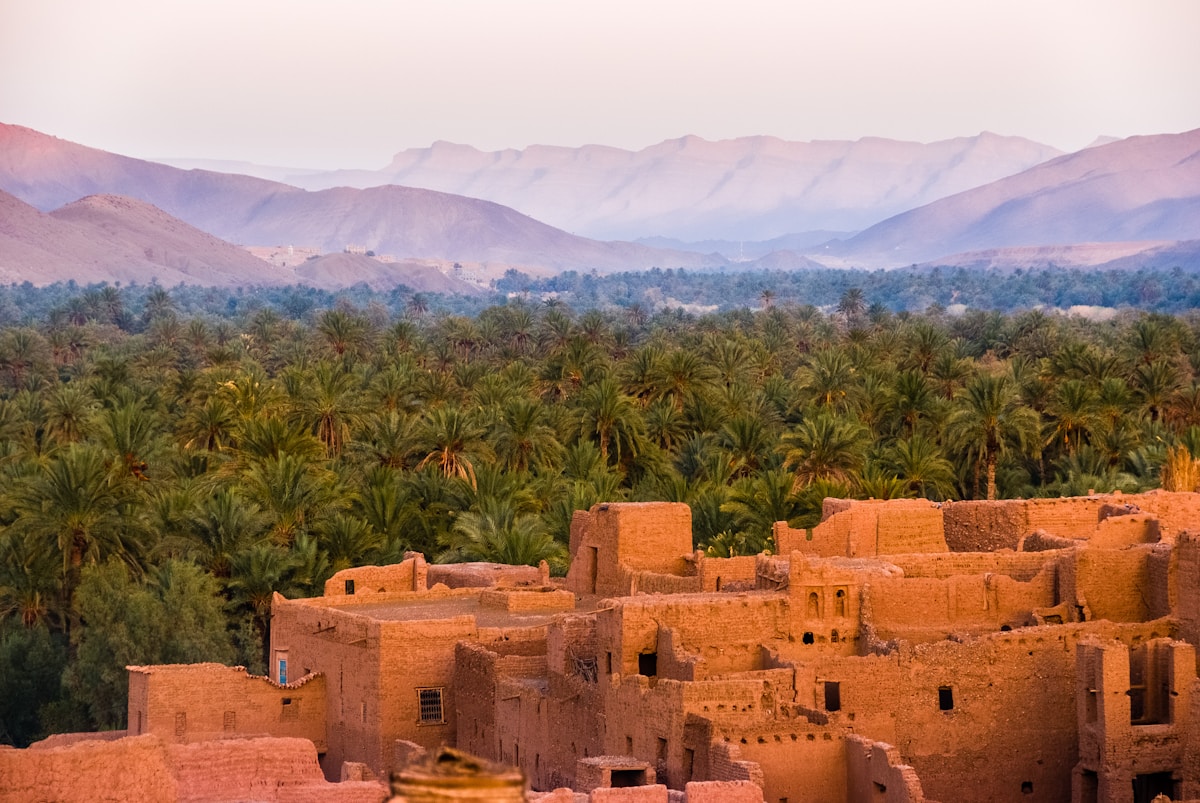
Morocco is the gateway to Africa for European travelers — just 14km across the Strait of Gibraltar from Spain, yet a world away. From the blue streets of Chefchaouen to the pink walls of Marrakech, from the snow-capped Atlas Mountains to the endless dunes of the Sahara, Morocco compresses an entire continent’s worth of landscapes into a country the size of California.
The desert is where Morocco reveals its deepest self. An hour from the nearest town, the world goes silent except for the wind and the creak of your camel. The stars — there are more stars than you’ve ever seen — arch overhead in a band of white light. This is the Africa of imagination, and it still exists here.
The Route: Marrakech to the Sahara
Day 1-2: Marrakech
The Djemaa el-Fna square is the world’s most chaotic and compelling — snake charmers, storytellers, musicians, and food stalls filling the massive square at sunset. The square transforms completely after dark: hundreds of food stalls appear, the air fills with smoke and sound, and the crowd is entirely local and tourist mixed.
Explore the souks (markets) beyond the square — leather, spices, carpets, lanterns. Get lost in the medina’s lanes intentionally. Stop for mint tea at any café with a view of the Koutoubia Mosque minaret.
Book a Marrakech food tour to decode the souks and find the best hidden restaurants.
Day 3: Marrakech → Ait Benhaddou → Ouarzazate → Dades Gorge (300km)
The drive over the Atlas Mountains (Tizi n’Tichka pass, 2260m) is spectacular — the landscape shifts from palm trees and ochre earth to alpine pine forests in two hours.
Ait Benhaddou is a UNESCO site: a ksar (fortified village) built entirely from mud brick, used as the set for Lawrence of Arabia, Gladiator, and Game of Thrones. The walk across the river to the main gate is free; climbing the tower requires a local guide (¥20-30).
Ouarzazate is Morocco’s “Olywood” — film studios where parts of The Mummy and Babel were shot. The Taourirt Kasbah (¥20 entry) is the most impressive traditional building.
Day 4: Dades Gorge → Todra Gorge → Merzouga (300km)
Todra Gorge is a 300-meter-high limestone canyon — walk the 600-meter path through the gorge floor, looking up at walls that feel like they’re leaning inward. Early morning is best, before the tour buses arrive.
Day 5-6: Merzouga Desert Camp
Merzouga is the gateway to Erg Chebbi — the Sahara’s most accessible giant dune field, with dunes reaching 150 meters. Camel trekking into the desert camp is the quintessential Morocco experience.
What to expect: Depart at 4pm on camels (1.5-2 hour ride), watch sunset from a high dune, arrive at the camp as stars appear. The camp is basic but atmospheric — Berber tents, rugs on sand, dinner cooked over an open fire. After dinner, your guide will play theberger (goat herder’s flute) and teach you desert star navigation.
Luxury upgrade: Merzouga’s desert camps range from ¥150/night (basic) to ¥800/night (luxury domes with AC, en-suite, and private dune viewing decks). The luxury camps are worth it if you’re celebrating something.
Book via Merzouga desert camp platform — the agency-run camps are more reliable than walk-in bookings in town.
Practical Tips
Bargaining: Morocco’s souks run on bargaining — start at 30-40% of the asking price and meet somewhere in the middle. If you don’t want to buy, don’t start the conversation. A firm “la, shukran” (no, thank you) after a polite attempt is the graceful exit.
Dress code: Morocco is a Muslim country. Dress modestly in the medinas (cover shoulders and knees), especially in Marrakech. In the desert and coastal areas, dress is more relaxed.
Money: Moroccan dirham (MAD). €1 ≈ 11 MAD, $1 ≈ 9.5 MAD. Cash is king in the souks — bring enough for small purchases. ATMs are widely available.
Getting around: Rent a car (¥250-400/day for a compact) to drive the route yourself — it’s straightforward and lets you stop where you want. Morocco car rental from Marrakech airport. Driving in Marrakech itself is chaos — park at your riad and don’t attempt to drive in the medina.
Stay connected: Morocco SIM cards (Maroc Telecom, Orange) are sold at the airport. Buy a European eSIM before arrival for instant connectivity.
Budget Math
| Expense | Daily Average | Notes |
|---|---|---|
| Accommodation | ¥400-1,200 | Hostel to riad |
| Transport | ¥200-500 | Bus or car |
| Food | ¥150-400 | Tagine and couscous |
| Activities | ¥200-600 | Desert camp, guides |
| Total | ¥950-2,700 | Per person, per day |
Morocco is excellent value — a quality riad (traditional Moroccan house-hotel) costs ¥400-800/night, dinner at a local restaurant is ¥30-60, and a full-day guided tour is ¥200-400.
Want to turn travel into a career? Join Travel Arbitrage Partners