📑 Table of Contents ▾
Northern Lights chasing in Norway — Tromsø aurora viewing, Lofoten Islands photography spots, and the complete Arctic Circle winter road trip.
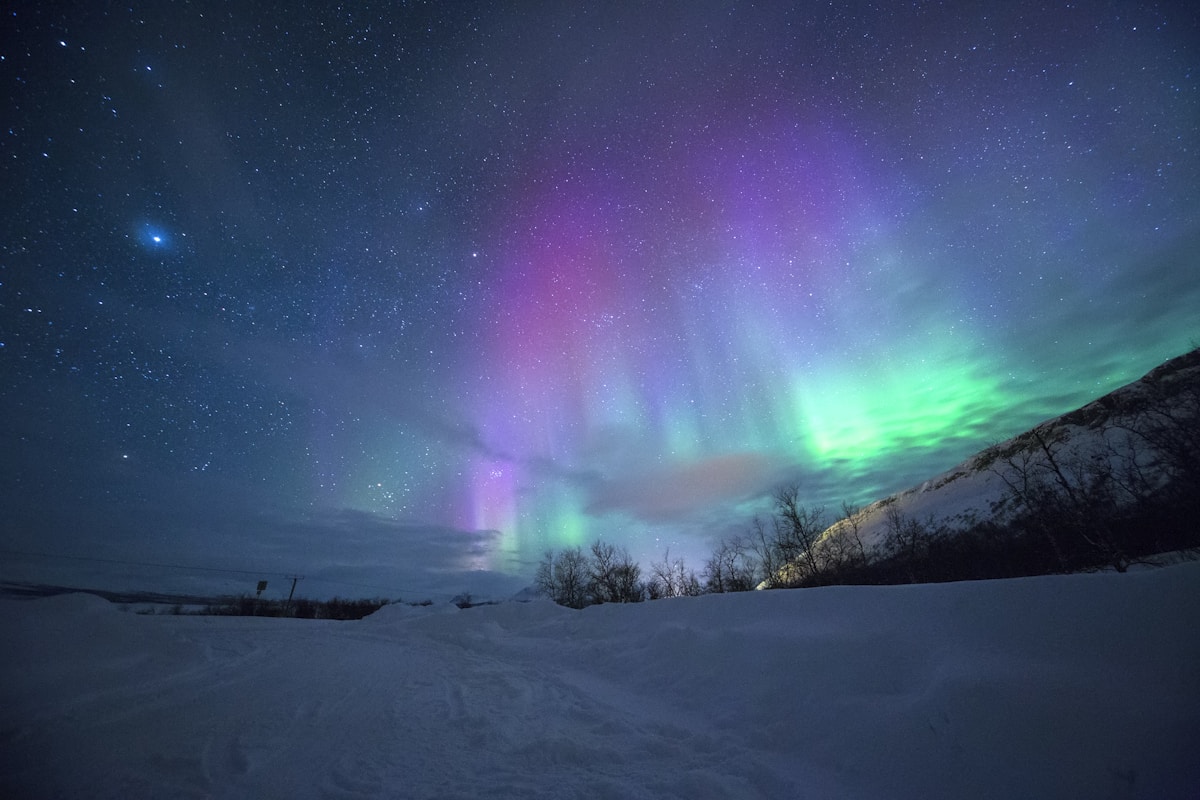
Above the Arctic Circle, between September and March, the sky transforms into a theater. The aurora borealis — solar particles colliding with the earth’s magnetic field — paints the darkness with curtains of green, purple, pink, and white light that ripple and dance across the entire sky. Norway’s northern coast is one of the best places on earth to watch this performance.
The key is darkness and clear skies. In December, Tromsø sees only a few hours of twilight — the rest is darkness, giving you maximum aurora-watching hours. The tradeoff is cold (-10°C to -20°C is normal) and unpredictable weather.
Tromsø: The Aurora Capital
Tromsø is Norway’s largest city north of the Arctic Circle — a university town of 75,000 with a vibrant cultural scene despite its remote location. It’s also one of the world’s most accessible aurora destinations: an international airport with daily connections to Oslo, and a compact city center that’s walkable in 20 minutes.
Aurora hunting strategies:
- Northern Lights tour: Most visitors book a tour with one of Tromsø’s many aurora chaser operators. They monitor weather satellite imagery and drive to the clearest spot — even if it’s 2 hours away. Book via Tromsø aurora tours. (€120-200/person, includes transport, thermal suit, warm drinks)
- Self-drive: Rent a car and use the Norwegian Meteorological Institute’s cloud cover map (yr.no). Drive north toward Finnish border where cloud cover is often thinner.
- Fjord camping: Some adventurous travelers camp overnight in reindeer-fur sacks at strategic fjord viewpoints, waiting for the lights to appear.
Best Aurora Months: September-October (autumn colors + aurora), November-December (longest darkness), January-March (stable cold weather, more predictable).
The Lofoten Islands: Drama in Every Frame
South of Tromsø but still above the Arctic Circle, the Lofoten Islands are a archipelago of dramatic peaks rising straight from the sea — the kind of landscape that makes you understand why Vikings thought gods lived in the mountains.
Photography hotspots:
- Reine: The iconic Lofoten image — fishing cabins (rorbuer) on stilts over water with the Moskenesøya peaks as backdrop. Sunrise reflection shots are legendary.
- Nusfjord: The most preserved fishing village, with an active harbor and the classic red rorbuer cabins
- Eggum: Northern Lights location — low on the horizon here, the aurora reflects off the sea creating mirror-perfect shots
The 150km road (E10) from Å in the south to Laukvik in the north connects most of the islands’ villages. Drive it in 3-4 days, staying at rorbuere accommodations (traditional fisherman cabins) along the way.
Book Lofoten accommodations well in advance — this is a tiny island with limited hotel capacity and a global reputation. Lofoten booking platform opens 6-12 months ahead for peak summer.
Arctic Circle Crossing: What It Means
The Arctic Circle (66°33’ north) marks the southern boundary of the midnight sun (summer) and polar night (winter). North of this line, the sun doesn’t rise for at least one day in winter — and doesn’t set for at least one day in summer.
Cross it on the Nordkapp/Hammerfest route — the famous North Cape plateau at 71°N. The Arctic Circle marker is a simple sculpture on the roadside, but the moment of crossing is real: at this latitude, you’re officially in the land of the midnight sun and polar night.
Budget Guide: Northern Norway
Norway is notoriously expensive. Here’s how to manage:
Flights: Norway’s domestic network (Widerøe, SAS) connects remote communities. Book 2+ months ahead for the best fares. Tromsø ↔ Lofoten flights from €80 one-way.
Accommodation: Budget options are limited but exist:
- Tromsø: Smart Hotel (€80-120/night, small but modern), or camping cabins (€60-90)
- Lofoten: Rorbuer (fisherman cabins) are the iconic stay — €100-200/night for a basic one-bedroom cabin. Book via Lofoten booking.
Eating: Grocery stores (REMA 1000, Kiwi) to self-cater. Budget €20-30/day for food. Restaurant meals start at €30/person.
Car rental: Essential for Lofoten — €50-80/day in winter. Book well ahead. The E10 road is steep and winding but manageable with a small 2WD.
Want to turn travel into a career? Join Travel Arbitrage Partners

