Yes, you can ride in Iceland on a foreign licence, but the rules are narrower than most rental listings suggest. The Icelandic Transport Authority says EEA licences are valid in Iceland, and non-EEA licences are valid for 6 months. Motorcycle categories start at age 17 (A1), 19 (A2) and 24 (A), so the youngest or least-licensed rider in your group sets the limit for everyone. The official pages do not say whether an International Driving Permit is required, and they do not say which category a rental bike needs for a visitor. Ask the rental company both questions in writing before you pay.
The rest of this guide covers what the official pages do say: licences and ages, gear, road rules, gravel and F-roads, weather sources, and how to plan a first trip as a group. Prices, rental shops and itineraries with costs are left out on purpose, because no official page gives them.
Can you ride on your home licence?
Two facts come from the Icelandic Transport Authority's help page on foreign licences:
- Licences from EEA countries are valid in Iceland.
- Licences from non-EEA countries are valid for 6 months. After that you must change to an Icelandic licence.
For a summer trip, the 6-month limit will not matter. What matters is the category printed on your licence. The Transport Authority says licence categories are shown as letters and a pictogram on the back of the licence, together with the first date of issue and the final date for each category. Look at the back of your licence now, not at the rental desk.
What the pages do not state:
- Whether an International Driving Permit is required. The pages don't mention it, so don't assume either way.
- Which motorcycle category a rental firm must see on a foreign licence. The category table below is the only official reference found for this.
- Any rental company's own age or experience rules.
Which licence category covers which bike
This is the official table from island.is, trimmed to the motorcycle rows. The ages are the minimum ages for each category.
| Category | Minimum age | What it covers (island.is wording, simplified) |
|---|---|---|
| AM | 15 | Motorcycles and three-wheelers up to 50 cc, designed for speeds up to 45 km/h |
| A1 | 17 | Two-wheel motorcycle up to 125 cm³, up to 11 kW, power-to-weight ratio up to 0.1 kW/kg; also three-wheelers up to 15 kW |
| A2 | 19 | Two-wheel motorcycles up to 35 kW with a power-to-weight ratio up to 0.2 kW/kg; also AM and A1 vehicles |
| A | 24 | Motor tricycles over 15 kW, AM and A1 vehicles, and off-road vehicles such as snowmobiles; this row does not specify two-wheel motorcycles beyond A1 |
Three points that follow from the table:
- A1 is defined by engine size and power (125 cm³, 11 kW), not by whether the bike looks like a scooter. Ask the rental firm for the exact power figure of the bike you are offered.
- A2 has a 35 kW cap and a power-to-weight limit. The table lists age 24 for category A, but its A row does not specify which larger, more powerful two-wheel bikes it covers.
- The page gives minimum ages for getting each category. It does not say how those ages apply to a visitor with a foreign licence, so age rules for foreign riders are a question for the rental firm.
Mopeds and scooters
The Transport Authority treats slower machines separately. Mopeds fall into two classes:
| Class I | Class II | |
|---|---|---|
| Design speed | Up to 25 km/h | Up to 45 km/h |
| Minimum rider age | 13 | 15 |
| Licence | Not required | A B or AM qualification |
| Helmet and clothing | Protective helmet | Motorcycle helmet and protective clothing |
| Registration, inspection, insurance | Exempt | Required |
A machine designed to travel faster than 45 km/h counts as a motorcycle under Icelandic traffic law, which is the "heavy motorcycle" set of rules. The moped page also says electric scooters belong to the bicycle category, not a motorcycle category. For a Ring Road trip, mopeds are the wrong tool: the road speed limits below are 90 km/h on paved rural roads, far above a 45 km/h design speed.
Helmet, clothing and passengers
The Transport Authority's heavy motorcycle page, compiled with the driving instructors association and the capital area police traffic department, sets out these points:
- Helmet: it must be CE marked and intended for motorcycles. It must fit well and must not have taken a knock. The page says a helmet's life is commonly 5 years, and the manufacture date is on the label inside.
- Clothing: motorcycle-specific, CE marked, made of strong protective material, with impact armour built in. The page says winter gloves are usually best for riding in Iceland, and it recommends boots with stiff ankles.
- Visibility: it advises reflective material and bright colours, and lights on by day and night.
- Passengers: the rider must be 20 or older, and only if the manufacturer confirms the bike is made for a passenger. The passenger sits behind the rider. A child aged seven or younger needs a special seat, and a bike with a passenger seat must have leg restraints for the passenger.
For a group of friends, the passenger rule matters: two friends sharing one bike is only allowed if the rider is 20 or older and the bike is built for two.
The official pages say nothing about rental helmets. Check that the one you are handed is CE marked and fits, using the list above.
Speed limits and road rules
The Safetravel driving pages give the rules a visitor needs. Safetravel and the Icelandic Transport Authority jointly created the driving information page for foreign tourists.
| Rule | What Safetravel states |
|---|---|
| Urban areas | 50 km/h |
| Rural gravel roads | 80 km/h |
| Rural paved roads | 90 km/h |
| Single-lane bridges | 50 km/h |
| Alcohol | BAC limit 0.2 per mille, which means no driving even after one drink |
| Lights | Headlights and taillights on at all times, all year; an "Auto" setting may not be enough |
| Phone or tablet | Illegal to use while driving; heavy fines are possible |
| Off-road driving | Strictly forbidden |
The speed limits apply unless road signs say otherwise. Safetravel adds that limits assume the best conditions, and that you should choose your speed for the weather and road.
Other rules and habits from the same pages:
- Single-lane bridges: the car that reaches the bridge first crosses first. Slow down early, and if in doubt let the other car go.
- Roundabouts: in a two-lane roundabout, take the outer (right) lane for the first exit and the inner (left) lane for later exits. Once inside, you can't change lanes. The inner lane has the right of way when exiting, so watch it. Signal when you leave.
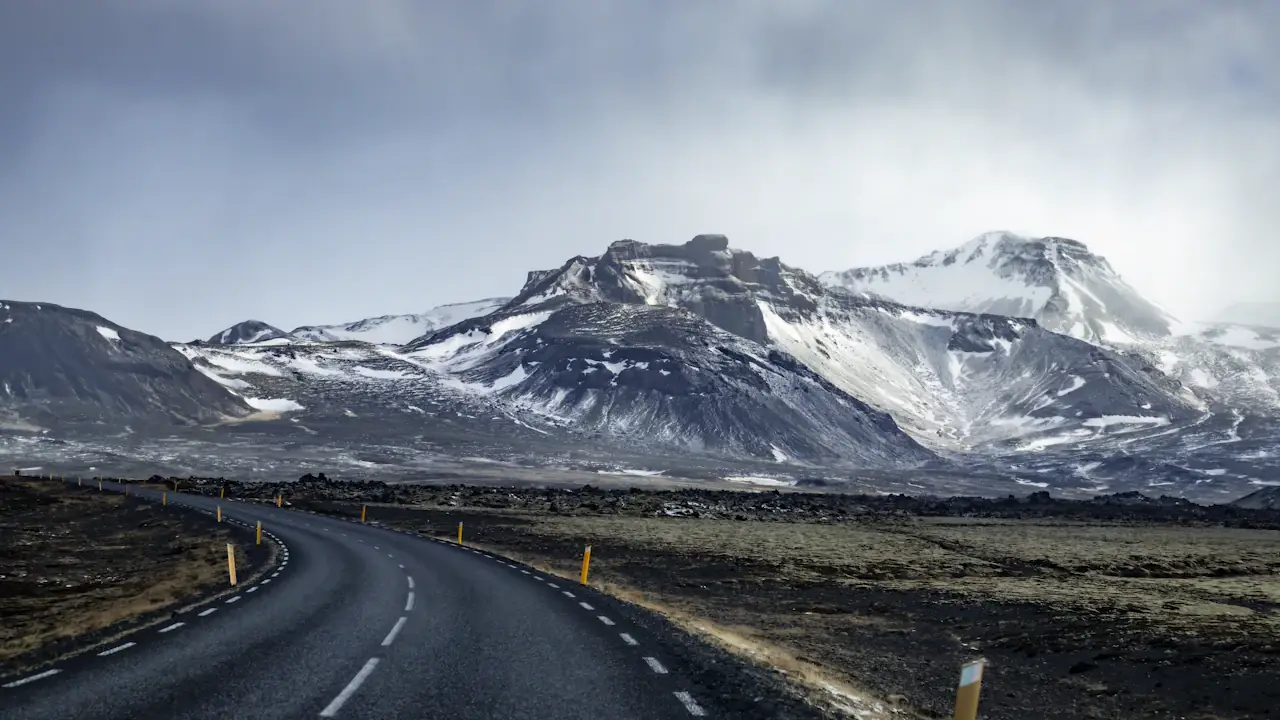
- Gravel: slow down before the pavement turns to gravel, because tyres can lose grip. Safetravel says there are many gravel roads, especially away from the Ring Road.
- Blind crests: keep to the far right and slow down.
- Sheep and livestock: expect them on or beside the road. A lamb on one side and a sheep on the other means one will probably run across.
- Cyclists: leave at least 1.5 metres when passing.
- Stopping for photos: don't stop in the road or at its edge. Find a safe spot off the road.
- Maps: Google Maps and similar apps may not show closed or impassable roads.
Gravel roads, F-roads and closed roads
Gravel roads and F-roads are different things, and the official pages treat them very differently.
Gravel roads. Rural gravel roads have their own 80 km/h limit, and Safetravel says gravel is common away from the Ring Road. Driving on a gravel road is not off-road driving. Leaving the road is.
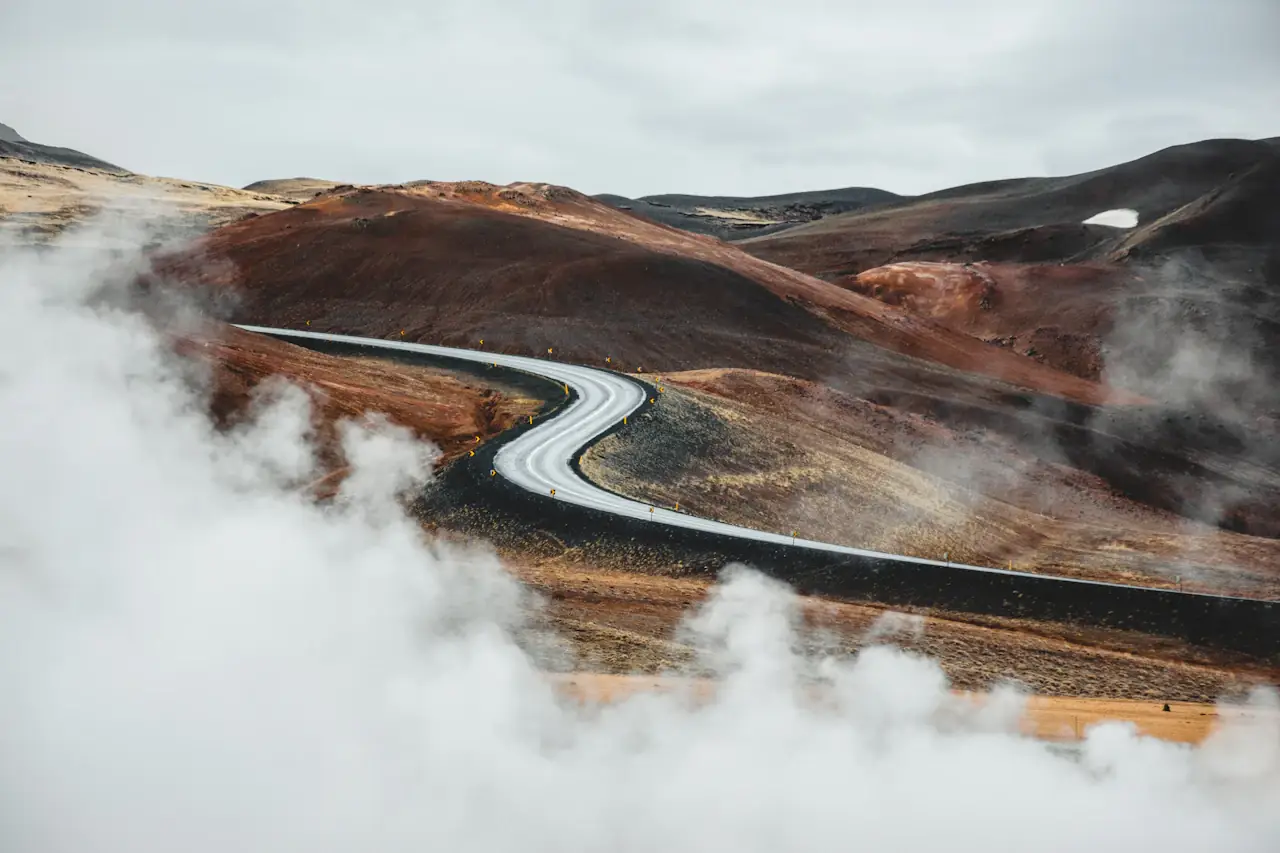
F-roads. These are the highland tracks. Safetravel's highland driving page describes them as very different from other driving: conditions change quickly, there are unbridged rivers, the roads are rough, and slow driving matters. It adds that not all 4WD vehicles suit all F-roads. Some are fine for a Dacia Duster-type car, others need a Toyota Landcruiser or bigger, and some need a modified vehicle.
Key facts from that page:
- The first thing to check is whether the F-roads in your area are open. Safetravel points to umferdin.is/en.
- F-roads are usually closed from mid-September until June or July. In that period they are closed or impassable for anyone not in a modified vehicle.
- No insurance covers damage to a vehicle while crossing a river. The risk is always yours, and damage can cost thousands of euros or dollars.
- If you are unsure about a river, don't cross it.
Whether a rental motorbike may go on gravel or F-roads: the official pages don't say. That is set by each rental contract, so read the terms and get the answer in writing. Don't rely on a rental listing or on what another rider did.
Closed roads. A road sign for a closed road means closed for all vehicles, including bicycles and motorcycles. Pedestrians may pass and bicycles may be pushed. Safetravel's wording is "Closed means CLOSED so absolutely NO DRIVING." Its top-tips page notes that the Icelandic word on such signs, "Lokað", means closed, and that roads are not closed unless it is urgently needed.
The official pages don't give the 2026 opening dates of individual F-roads. The live road status is the only source for that.
Weather and wind: what to check and when
The official pages give no summer temperature, rain or wind figures for riders, and no wind thresholds for motorcycles. What they give is where to look, and how often.
Safetravel's tips say to check weather and road conditions in the morning and a few more times during the day. The Transport Authority's bad-weather page lists these sources:
| Source | What it gives |
|---|---|
| Umferdin.is | Road conditions, wind, weather warnings from the Meteorological Office, and webcams |
| Safetravel.is | Warnings about special dangers on the roads and elsewhere, especially weather and traffic |
| Vedur.is warnings | Weather warnings, published when particularly bad weather is expected |
| Vedur.is wind forecast | Wind strength by time; pick your riding time and read the colour of the map where you're going |
That page singles out trucks, buses and cars with trailers as vehicles that take high winds badly. Motorcycles aren't on its list and it gives no threshold for them. Treat a strong-wind colour on the map, or a warning on your route, as a reason to change plans for the day. Safetravel also has an app for the latest information and alerts, and says weather and road conditions in Iceland can change fast.
Pre-ride checks and riding as a group
Before you leave the rental lot, the Transport Authority lists what to check on the bike: the main light, mirrors, indicators, brakes, steering, horn, tyre tread depth and quality, and tyre pressure. It also suggests looking at chain condition and tension, and at brake pads and discs. Do all of this on the actual bike you were handed.
On tyres, the same page says:
- A tyre's life is normally not more than 5 years from its manufacture date. The date is on the sidewall as four digits, the first two for the week and the last two for the year (2314 means week 23 of 2014).
- Check sidewalls for cracks, especially on tyres 4 to 5 years old.
- Too little pressure is a high risk, especially on uneven surfaces, in corners and at speed. Too much pressure reduces grip. Measure pressure on cold tyres. The recommended pressure can be marked on the wheel, in the manual or on the tyre sidewall.
- New tyres can be slippery at first. Cold roads and cold tyres can create dangerous conditions.
On the road, the same page gives advice that suits first-timers riding together:
- Assume other road users will not see you, or will misjudge your speed. A large share of serious accidents happen because other drivers didn't see the motorcycle in time, and the risk rises with speed.
- Keep at least four seconds behind the vehicle in front. On a motorcycle, too little distance is very dangerous.
- Watch for sand, oil and gravel (especially in turns), water on the road, painted road markings that are higher than the asphalt, and holes.
- Always be ready to stop, even when you have a green light or priority.
- Being trained on one type of bike does not automatically carry over to another type, so a rider who is used to a small scooter should not assume a heavier bike will feel the same.
Fatigue. Safetravel's top tips say not to drive when tired: switch drivers or stop for 15 minutes, and don't schedule long days. Its driving page also warns about jet lag and fatigue after an overnight flight, and points to Nap&Go, a scheme with hotels near Keflavik Airport that offers a few hours of morning rest. The official pages used here don't give an emergency phone number. Look it up on Safetravel and save it in every rider's phone before day one.
Planning your days from Reykjavik
The official pages give no daylight hours, no daily distances and no advice on when to book a bike, so none of that is stated here. What they do give is a way to plan:
- Plan by weather first. Look at umferdin.is and the Vedur.is wind map the evening before and again in the morning. Keep at least one spare day in the schedule so a bad forecast doesn't push you onto the road.
- Keep days short enough to stop. Safetravel's advice is not to schedule long days. Safetravel warns about single-lane bridges on and off the Ring Road, gravel roads especially away from it, and livestock on or beside roads. Plan time to slow down and stay alert.
- Stay on paved roads unless the rental terms say otherwise. The official pages don't say whether rental bikes may use gravel, and F-roads are usually closed until June or July anyway.
- Ask the rental firm about the route before booking. It's their contract that sets the limits, so tell them your plan and get their answer in writing.
- Ride as a group but not as a train. Keep the four-second gap and stay visible to each other and to traffic behind. Agree on a place to regroup in case someone is held up at a bridge or a junction.
Which should you choose
Route your group by the lowest licence and the least experience among you.
| Your situation | What fits |
|---|---|
| Someone holds only an AM licence, or no motorcycle category | Mopeds are class I or II under the Transport Authority's rules, and even class II is limited to a 45 km/h design speed, which does not suit rural roads with a 90 km/h limit. Ride pillion only where the rider is 20 or older and the bike is made for two. |
| Licence shows A1 (age 17 and over) | A bike inside the A1 limits: up to 125 cm³, 11 kW and 0.1 kW/kg. Suits a short, paved day trip from Reykjavik. |
| Licence shows A2 (age 19 and over) | A bike up to 35 kW with a power-to-weight ratio up to 0.2 kW/kg. Ask the rental firm for the bike's power figure. |
| Licence shows A (age 24 and over) | The official category table does not specify two-wheel motorcycles beyond A1 in its A row. Ask the rental firm to confirm that your licence covers the offered bike. |
| Mixed group with different categories | Match each rider's bike to their own licence. One person's higher category does not cover the others. |
| The plan includes gravel or F-roads | Get the rental terms in writing first. Check umferdin.is/en for F-road status. Drop any river crossing you're unsure about. |
| The forecast shows warnings or strong wind on your route | Change the day. The official sources above are the ones to trust. |
| Group has jet lag after a night flight | Rest before the first ride, as Safetravel advises. |
Need flights or a hotel quote?
We can help with flights and hotels for Iceland. Send us your travel dates and we will come back with a quote: contact us.