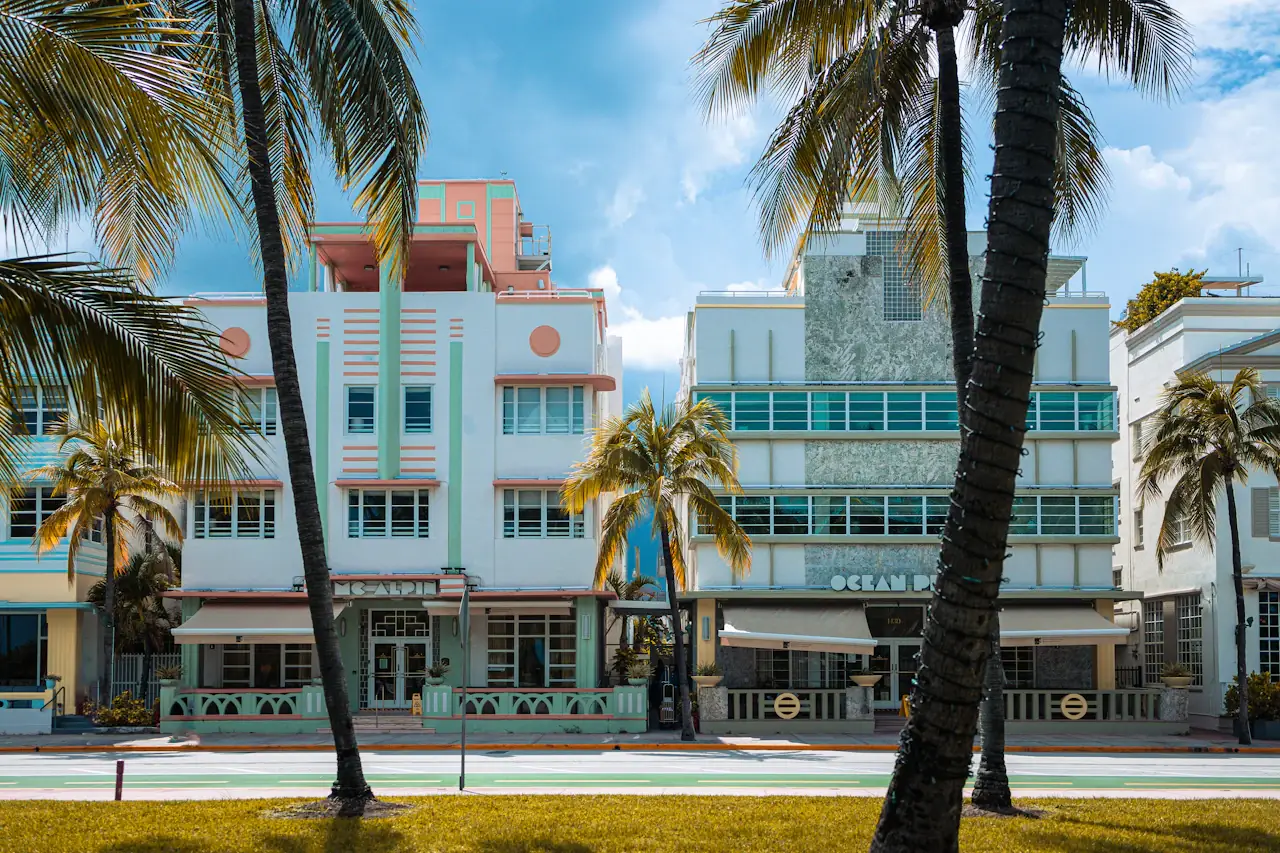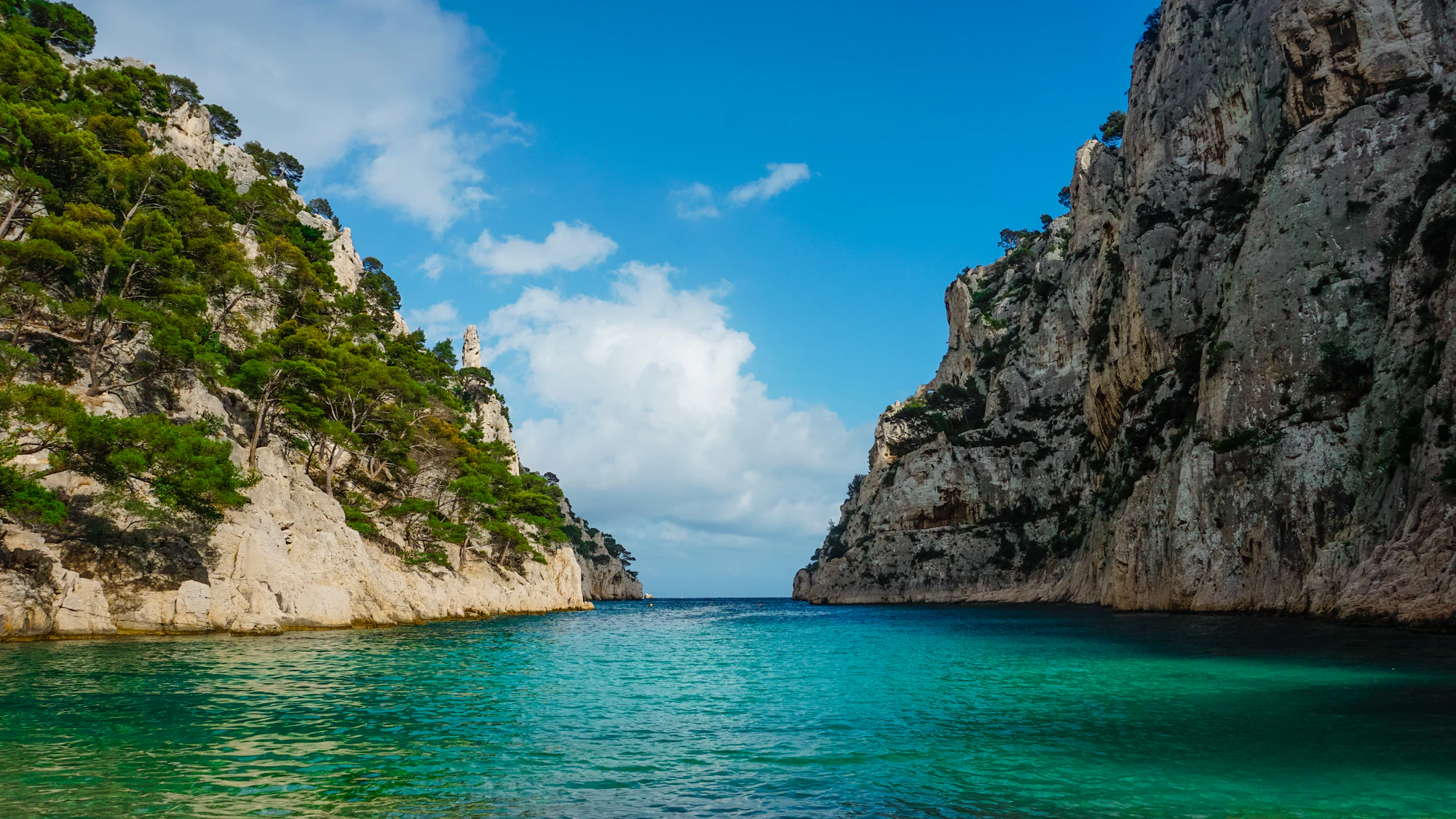
Pick Marseille if you are flying in, want a big city with the Calanques on its doorstep, or want the simplest onward connections. Pick Cassis if you want a small village at the Cassis end of the Calanques, close to Cap Canaille and the Route des Crêtes. The choice is not costly to get wrong: SNCF Connect lists 25 departures from Marseille to Cassis on Sunday 27 September 2026, including 24 direct trains, and the park's access rules are the same wherever you sleep. The rest of this guide covers the transfers, the Calanques rules for 2026, and how to split your days.
Marseille vs Cassis at a glance
| Marseille | Cassis | |
|---|---|---|
| From Marseille Provence Airport (MRS) | Airport shuttle to Saint-Charles station, 30 to 50 minutes in normal traffic | 55 km; about a 50-minute drive, or shuttle plus train in 1 hour 15 minutes to 1 hour 30 minutes |
| By rail | TGV connections are listed from Marseille (for example Paris in 3h20) | Cassis station is on the Marseille–Toulon–Nice line, with regular direct services from Marseille |
| Getting around | Metro run by RTM, plus other services from Métropole Mobilité | The tourism office says everything can be done on foot or by eco-friendly transport; the station is 3 km from the centre |
| Calanques its official pages name | Sugiton, Sormiou, Callelongue, Marseilleveyre | Port-Miou, Port-Pin, En-Vau |
| Beyond the Calanques | 57 km of seafront; the Frioul islands, about 4 km offshore | Cap Canaille and the Route des Crêtes |
Sources for this table: the Marseille city page on the coast, the Cassis tourism office and the airport's shuttle page.
How far apart are they, and how do you get between them?
The Calanques run for 20 km along the coast between Marseille and Cassis. By road it is about 30 minutes on the A50. The official pages give no distance in kilometres for the road, so this guide does not either.
| Option | What the official pages say |
|---|---|
| Train | SNCF Connect: 25 departures on Sunday 27 September 2026, including 24 direct trains, first at 6:43 and last at 21:42, average journey 19 minutes, shortest 16 minutes. The Cassis tourism office says direct services run about every 30 minutes and quotes about 30 minutes in total |
| Bus 78 | Marseille (Castellane) to Cassis city centre, every day, every 45 minutes. No journey time is given |
| Train to Aubagne, then direct bus | Around 45 minutes for the whole trip, per the Cassis tourism office |
| Car | A50 from Marseille, 30 minutes. Exit 8 (Cassis) is a toll exit; exit 6 (Carnoux) also leads to Cassis |
Some details worth knowing:
- The SNCF timetable is for Sunday 27 September 2026, so other weekdays may differ. It lists departures from Marseille Blancarde, calling at Aubagne before Cassis. The airport-to-Cassis route on the Cassis page goes via Saint-Charles. The pages do not say which trains serve both stations.
- On that Sunday, 24 of the 25 trains listed were direct, taking 16 to 22 minutes. One evening train needed a change at La Ciotat-Ceyreste and took 46 minutes.
- SNCF Connect showed a fare of 8 € on some trains and dates between 26 September and 18 October 2026: one person, one way, second class, selected trains only, subject to availability. The page does not list fares for other trains and dates.
- Regional TER tickets are refundable until the day before travel. There are no luggage size or weight limits, which helps if you switch bases mid-trip.
- Cassis station is 3 km from the village centre, about a 40-minute walk with an uphill return. Bus 371 (Casino – Gare – Le Brégadan) and taxis cover the gap.
- The page shown covers Marseille to Cassis only. Before a Cassis-to-Marseille day trip, look up the last train back.
From Marseille Provence Airport to Marseille or Cassis
To Marseille. The A1 shuttle runs from the airport to Marseille Saint-Charles station by direct motorway. The journey takes 30 to 50 minutes in normal traffic. From the airport, the first departure is at 4:05 am. Early departures are at 4:05 am, 4:25 am and 4:40 am, then every 20 minutes until 7:00 am. From 7:00 am to 8:00 pm buses leave every 10 minutes, then every 20 minutes until 1:40 am. The last departure is at 1:50 am, marked on the page as May to October only. You can buy tickets online, at the ticket offices, or from the driver if the offices are closed. The page does not list fares here.
To Cassis. The Cassis tourism office gives two ways. The first is the shuttle to Saint-Charles and then a train to Cassis, with an estimated total of 1 hour 15 minutes to 1 hour 30 minutes. The second is a drive of about 50 minutes; the airport is 55 km from Cassis.
If you land late, do the sums before booking Cassis for night one. The only train timetable in the sources shows a last direct departure from Marseille at 21:42, on that one Sunday. A first night in Marseille is the safer plan for late arrivals, though that is a reading of the timetable rather than an official recommendation.
Visiting the Calanques from either base
The Marseille city page describes the Calanques between Marseille and Cassis as a natural area covering more than 5,000 hectares. The Marseille city page estimates 800,000 visitors a year across all the Calanques. Port-Miou is described as the most visited natural space in the region.
Basic rules, from the park's FAQ.
- Entry is free and the park is open 24 hours a day, except on days classed red for fire danger.
- Between 1 June and 30 September, the Prefecture decides at 6 pm each day whether the massifs close. The park's FAQ page and the My Calanques app carry the decision.
- The park recommends public transport, because traffic and parking around the sites are very difficult.
- Reaching the most popular sites takes a walk that is sometimes long and difficult. The official pages give no route lengths or hiking times, so this guide has none.
- Dogs are allowed on a leash.
Which calanques from which base? The pages do not rank the two bases. Marseille's city page names Sugiton, Sormiou, Callelongue and Marseilleveyre. Cassis's tourism site features Port-Miou, Port-Pin and En-Vau, and calls Port-Miou the ideal starting point at the entrance to the park. The park itself highlights the many social-media photos of Sormiou, Sugiton, En-Vau and Port-Pin. Choose your base by which of these you most want.
The Sugiton reservation. Sugiton and Pierres Tombées are eroding from heavy footfall, with peaks of up to 2,500 visitors a day. In 2026 the park required a booking to enter on these dates: 20 and 21 June, every day from 27 June to 30 August, 5 and 6 September, and 12 and 13 September. All of those dates have now passed. The park's board has renewed the system until 2027, but the pages do not give the 2027 dates, so look them up on the park's Sugiton page before a summer trip.
| Rule | Detail |
|---|---|
| Cost and eligibility | Free, open to everyone |
| Booking window | Opens at 9:00 am, 3 days before your visit; closes at 6:00 pm the day before |
| Group size | Up to 5 people per booking; children under 3 do not need one |
| Per person | Up to 8 bookings during the reservation period |
| What it covers | Full-day access to the Sugiton and Pierres Tombées coastal zone |
| On arrival | Show the confirmation email |
| Fire closure | All bookings are cancelled automatically, with an email the day before; they cannot be moved to another date |
The reservation is tied to the cove, not to the town you start from, so Marseille and Cassis bases face the same rule. Sugiton is the only site with a reservation system in the sources. There is no paid booking for the Cassis coves in them.
Swimming. The park says the Calanques' swimming spots are hard to reach, often crowded, and have no toilets, showers, refreshment stands or bins. It points swimmers to the urban beaches of Marseille, Cassis and La Ciotat instead.
On the Marseille side, the city page says slag from 19th- and 20th-century industry still surfaces on paths and roadsides between La Madrague de Montredon and Callelongue, with health and environmental risks. A clean-up programme of 14 million euros was finalised in 2024. The page does not say which paths are affected, so read the signs on site.
Beyond the Calanques: Cap Canaille and the Route des Crêtes
Cassis has more than the coves. Cap Canaille is 394 m high, the highest sea cliff in France and one of the highest in Europe. It sits between La Ciotat and Cassis. Its red colour comes from Cretaceous marl and sandstone.
The Route des Crêtes is a 15 km panoramic road linking Cassis to La Ciotat along the cliff tops. It has developed viewpoints, car parks and hiking trails. The rules matter more than the view when you plan:
- Sundays: since 2024 the road is pedestrianised every Sunday, from 0h to midnight. A shuttle bus runs from Cassis (Gorguettes car park and Casino roundabout) to Les Crêtes and back. The page does not give the shuttle timetable.
- 1 June to 30 September: access is restricted, and the page says conditions vary. In summer access is subject to fire regulations.
- Wind: access closes in strong winds, including the mistral.
- On foot: bring at least 1 to 2 litres of water each, good walking shoes, and weather protection. Stay on signposted paths and away from the cliff edge.
- By car: the Cassis page recommends approaching from La Ciotat on a day without strong wind. The road is closed to traffic on Sundays.
The Cassis tourism site also lists beaches, boat trips to the Calanques, water sports, guided tours and beach restaurants. It gives no prices in the pages used here.
Marseille beyond the Calanques. The city page describes 57 km of seafront from L'Estaque to the Calanques, and the Frioul archipelago: four islands, more than 200 hectares, about 4 km offshore. The pages used here say nothing about the city's museums, churches or markets, so this guide leaves them out rather than repeat unsourced details.
How many days, and is Cassis a day trip?
The official pages give no recommended length of stay, so what follows is a reading of the transport facts, not an official recommendation.
- Cassis as a day trip from Marseille works. With trains from 6:43 to 21:42 on the timetable shown and journeys of 16 to 22 minutes, you can have a full day at the coast without moving your bags. A Sunday adds the pedestrian Route des Crêtes, provided the wind and fire rules allow it.
- Marseille as a day trip from Cassis also works, with regular direct services from Marseille about every 30 minutes; the return timetable is not in the sources, as noted above.
- Weather and closures shape the plan more than distance. Fire closures can cancel a Calanques day, with a decision the evening before. Strong wind can close Cap Canaille. Keep one flexible day, and keep the urban beaches as a fallback.
- One base is enough for most trips. With regular direct services from Marseille about every 30 minutes, changing hotels between Marseille and Cassis buys you little. Split your stay only if you specifically want a night in each place.
Which should you choose?
| Your situation | Base in |
|---|---|
| Flying into MRS and arriving after the last evening train | Marseille for the first night |
| Not driving and want the most connections | Marseille, with the shuttle and the metro |
| Want to see Cassis and the Calanques but also a large city | Marseille, with Cassis as a day trip |
| Want a small village and an early start at the Cassis coves | Cassis |
| Want Cap Canaille and the Route des Crêtes, especially on a Sunday | Cassis |
| Coming for the Sugiton cove in a reservation period | Either; bookings open 3 days ahead |
| Want the shortest airport transfer | Marseille (30 to 50 minutes by shuttle) |
If none of these fits, base in Marseille: it has the direct airport shuttle, and Cassis stays a short train ride away.
Need flights or a hotel quote?
If you are pricing flights or a hotel for Marseille or Cassis, contact us with your travel dates and we will send a quote.