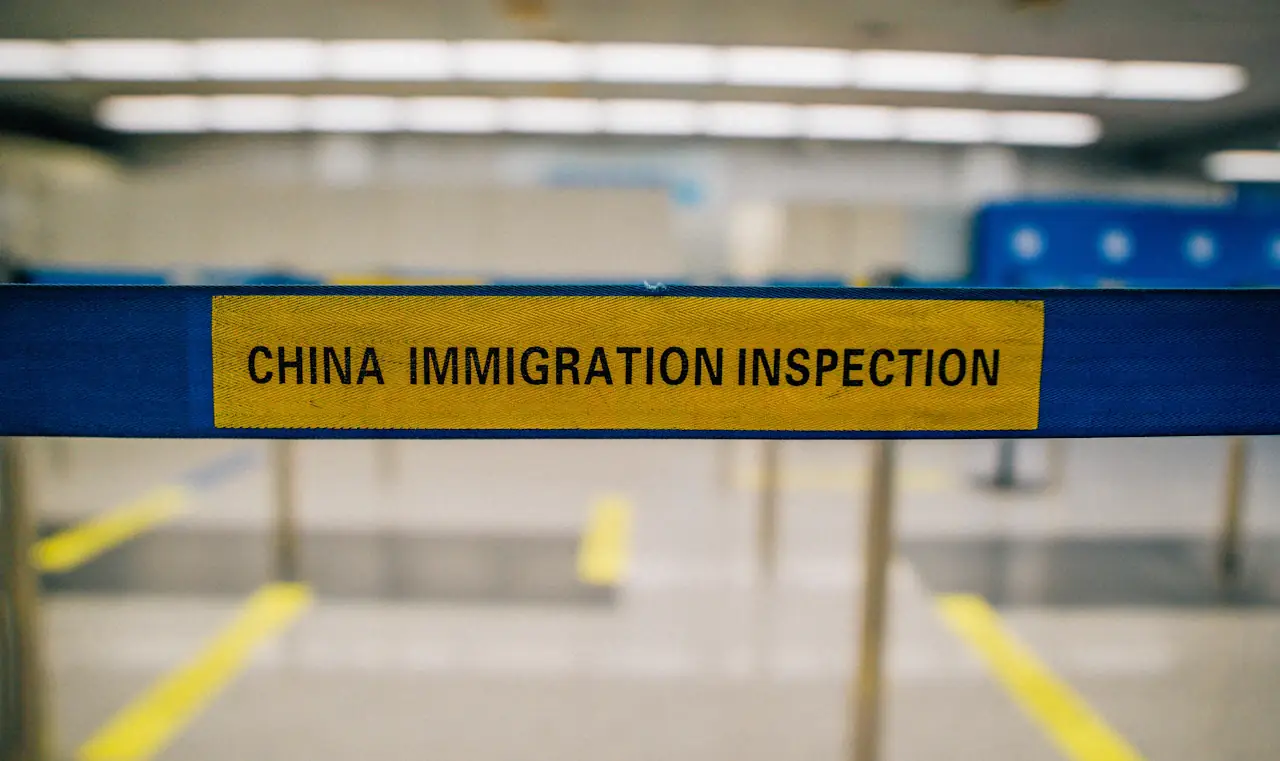
If you hold an ordinary passport issued by mainland China, you need a Standard Visitor visa before you travel to the UK, and you cannot use an ETA. GOV.UK's Visa national list names the People's Republic of China among the nationalities that need a visa in advance, and the ETA page lists Hong Kong SAR and Macao SAR but not mainland China. The visa costs £135 for up to 6 months. You apply online, attend an appointment at a visa application centre, and usually get a decision within 3 weeks. The earliest you can apply is 3 months before you travel, and GOV.UK says not to book travel until you have a decision.
Quick answer by situation
- Mainland China passport, holiday or family visit: Standard Visitor visa; mainland China is not on the ETA list.
- Mainland China passport, visiting the UK often: long-term Standard Visitor visa (2, 5 or 10 years), 6 months per visit.
- Mainland China passport, business trip: Standard Visitor visa, if no UK organisation or client pays you; the exception is a permitted paid engagement as an expert in your profession.
- Mainland China passport, a course of up to 6 months or a leisure course of up to 30 days: Standard Visitor visa; longer study needs another visa, except distance learning, where most study happens outside the UK.
- Mainland China passport, only changing planes in the UK: no transit visa if you hold a Standard Visitor visa or another listed exemption applies; otherwise Direct Airside Transit £41.50 or Visitor in Transit £74.50, depending on border control.
- Chinese tour group: listed as its own processing category; the pages that mention it do not say how to apply.
- Hong Kong SAR or Macao SAR passport, or a Taiwan passport that includes the ID card number: no visit visa for up to 6 months, except to marry or form a civil partnership, or give notice of either.
- BN(O) passport: no ETA and no visa to visit.
- Passport on the ETA list (for example United States, Japan): ETA at £20, not a visa.
Who needs a visa, and who uses an ETA instead?
GOV.UK's Standard Visitor Overview says your nationality decides whether you need a visa, an ETA (up to 6 months, no visa) or neither.
| Group | What GOV.UK says | Examples on the pages |
|---|---|---|
| Visa | Nationalities on the Visa national list (updated 3 August 2026) need a visa in advance of travel | China (People's Republic of), India, Indonesia, the Philippines, Thailand, Turkey, Vietnam |
| ETA | Nationalities on the ETA eligibility page (updated 9 April 2026) can apply; other nationalities cannot | United States, Canada, Australia, Japan, South Korea, Singapore, Hong Kong SAR, Macao SAR; a 5 March 2025 update adds EU countries (except Ireland), Switzerland, Norway, Iceland and several smaller European states |
| Neither | The "When you do not need an ETA" page lists, among others, British or Irish citizens, people with a UK visa or permission to live, work or study in the UK, and British National (Overseas) passport holders | None |
An ETA costs £20, with no refund after you apply, and another website or app cannot get you a faster decision. It covers tourism, visiting family, a business trip or short-term study. It lasts 2 years or until your passport expires, whichever is sooner, for as many trips as you want, each up to 6 months. An ETA does not guarantee entry, and with a criminal record or an earlier refusal of entry GOV.UK says you may want a Standard Visitor visa instead.
How much does a Standard Visitor visa cost, and how long can you stay?
The Standard Visitor "Apply" page lists these fees in pounds. The fee table Home Office immigration and nationality fees, 8 October 2026 (page updated 10 September 2026) gives the same figures and marks them unchanged from 8 October 2026.
| Visa | Fee | Maximum stay |
|---|---|---|
| Standard Visitor visa | £135 | 6 months |
| Standard Visitor, medical reasons | £234 | 11 months |
| Standard Visitor, academics | £234 | 12 months |
| 2-year long-term | £506 | 6 months per visit |
| 5-year long-term | £903 | 6 months per visit |
| 10-year long-term | £1,128 | 6 months per visit |
The Overview page says you can usually stay up to 6 months. On a long-term visa, the 2, 5 or 10 years is how long the visa lasts, not how long you can stay at one time. If you are under 18 when you apply, a long-term visa is only valid for up to 6 months after you turn 18, with no refund. UK Visas and Immigration (UKVI) may also give you a shorter visa than you asked for, again with no refund, or cancel the visa if your travel history shows you repeatedly live in the UK for extended periods.
A notice of 17 July 2025 from the Chinese Embassy in the UK (a Chinese-language page) says that illegal work or frequent long stays (more than 180 days in total in any consecutive 12 months) may lead to removal or refusal of re-entry. That is the embassy's statement, not GOV.UK's.
How do you apply from China, step by step?
- Check your plans. Confirm that what you plan to do is allowed. Your passport must be valid for the whole stay, and you must show that you will leave at the end of the visit, can support yourself and your dependants, and can pay for your return or onward journey (someone else's funding counts).
- Fill in the online application. You can save it and finish later. Documents not in English or Welsh need certified translations.
- Pay the fee and book your appointment inside the application. At the visa application centre you prove your identity with your passport, give fingerprints and a photo, and hand over the required documents. You get your passport back the same day. Each family member applies separately, with their own fee and appointment.
- Wait for the email. The Home Office emails you when it has decided and says what to do next. To change something after sending, contact UKVI.
The form asks for your travel dates, where you will stay, how much you think the trip will cost, your home address and how long you have lived there, your parents' names and dates of birth (if known), your yearly income (if you have one), and details of any criminal, civil or immigration offences. Depending on your circumstances, it may also ask for your travel history for the past 10 years, your employer's address and telephone number, your partner's name, date of birth and passport number, the name and address of anyone paying for your trip, the name, address and passport number of any family members in the UK, and a tuberculosis (TB) test certificate if you visit for more than 6 months.
The Apply and Overview pages publish no minimum balance and no list of bank documents.
Where do you give your fingerprints in China?
GOV.UK's "Find a visa application centre" page lists China among the countries that have a centre but names no Chinese city. If you do not choose a centre, one is chosen for you: the one most accessible to the country you live in. The China Consular Service Website page "UK: entry and residence" (Chinese-language, no date) says applicants should generally use the outsourced visa centres in Beijing, Wuhan, Shenyang, Jinan, Chongqing, Chengdu, Shanghai, Hangzhou, Nanjing, Guangzhou, Shenzhen, Fuzhou, Xi'an, Kunming, Changsha and other cities. The centre shown in your GOV.UK application is the one that counts.
How long does a decision take, and when should you book flights?
The Visa processing times page (updated 9 September 2026) lists 3 weeks for Standard Visitor, Transit and "Chinese tour group". The clock starts when you attend the appointment to give fingerprints and a photo, or verify your identity and submit your documents and application online with the UK Immigration: ID Check app. The page says some applicants can use the app instead of attending an appointment and that you are told if you can; the Apply page describes only the appointment. The clock stops when you get a letter or email saying a decision has been made. The "How to apply for a visa to come to the UK" page says any visa usually takes between 3 and 12 weeks.
Do not book travel before you have the decision, and do not travel before approval. UKVI will not reimburse travel costs or other expenses if your application is refused or takes longer than expected. For the departure from China, see China's cash limit, declaration and airport security rules.
A decision can take longer if you must give more evidence (for example evidence of funds), documents need verifying, or you must attend an interview; UKVI contacts you if so.
The faster-decision page says you may be able to pay for a faster decision. If you are eligible, you choose the service when you apply.
| Service | Extra fee | Usual decision |
|---|---|---|
| Priority | £500 on top of the application fee | Within 5 working days for most visa applications |
| Super priority | £1,000 on top of the application fee | By the end of the next working day if your appointment or document upload is on a weekday; 2 working days after if it is at a weekend or on a bank holiday |
Each family member pays the extra fee too, and you will not usually get the money back if the decision takes longer. The page does not say which applicants are eligible.
What can you do on a Standard Visitor visa, and what can't you do?
You can:
- visit as a tourist, or see family or friends
- volunteer for up to 30 days in total with a registered charity
- do certain business activities if no UK organisation or client pays you: meetings, conferences, interviews, signing contracts, trade fairs for promotion only (not selling), site visits
- do a recreational course of up to 30 days (not English language training), or study at an accredited UK institution for no more than 6 months, English language courses included (not an academy or state-funded school)
- pass through the UK, come for medical reasons, or do certain paid engagements as an expert in your profession, completed within 30 days of entering the UK
You cannot do paid or unpaid work for a UK company or as a self-employed person (unless it is a permitted paid engagement or event), claim public funds (benefits), live in the UK for long periods through frequent or successive visits, or marry or register a civil partnership, or give notice of either (that needs a Marriage Visitor visa). For study over 6 months, the Visit to study page names the Short-term study visa (English language courses up to 11 months), Student visa and Child Student visa.
For group tours, the processing-times page lists "Chinese tour group" as its own category, and the Permitted Activities page limits visitors under the Approved Destination Status Agreement to PA 2(a): visiting friends and family, or a holiday. Neither page says how a group-tour visa is applied for.
If your purpose is tourism in London, see a self-guided London day with official ticket and transport details.
Do you need a transit visa if you only change planes in the UK?
Check this first: the transit pages say you need no transit visa if you hold a valid ETA, a Standard Visitor visa, a Marriage Visitor visa, an EU Settlement Scheme family permit or a Home Office travel document. Otherwise the visa depends on border control, and your airline can tell you whether you will go through it. If you travel on to Ireland, the Channel Islands or the Isle of Man, the Visitor in Transit page says you will usually need a Standard Visitor visa unless you are exempt.
| Transit visa | When it applies | Fee |
|---|---|---|
| Direct Airside Transit | You change flights in the UK and do not go through UK border control | £41.50 |
| Visitor in Transit | You go through UK border control (for example to check in luggage for a connecting flight), leave the UK within 48 hours, and do not work or study | £74.50 |
Both pages say the fee may change slightly by country. If you stay more than 48 hours, or pass through the UK frequently over more than six months, apply for a Standard Visitor visa instead of a transit visa; an ETA holder does not need one.
Official documents list China as needing a transit visa unless an exemption applies. The Transit caseworker guidance (written for Home Office staff, last updated 25 March 2026) lists the People's Republic of China among the nationalities that need a Direct Airside Transit visa, and the carriers' page "UK visa requirements" (updated 3 August 2026) lists China among those that need a visa to enter or transit the UK.
Both documents list exemptions for airside transit, for example a valid visa for entry to Australia, Canada, New Zealand or the USA (you need not be travelling there); the guidance has the full list. You must also arrive and depart by air, hold a confirmed onward flight leaving the same day from the same airport, and carry the correct documents for your destination.
Landside transit without a visa has its own conditions: arrive and depart by air, hold a confirmed onward flight leaving before 23:59 the following day and the correct documents, and hold one of the qualifying documents the guidance lists. An immigration officer at the UK border decides. For both kinds of transit, other countries' e-visas and e-residence permits are not accepted (for airside, unless the airline can verify them with the issuing country).
What if you hold a Hong Kong, Macao, BN(O) or Taiwan passport?
| Passport | What the GOV.UK pages say |
|---|---|
| Hong Kong SAR or Macao SAR | Visa national list VN 2.2: no visit visa needed before you travel as a Visitor. VN 2.3: not if you visit to marry or form a civil partnership (or give notice of either), or seek to visit for more than 6 months. The ETA eligibility page also lists both regions |
| British National (Overseas) | The ETA eligibility page (13 March 2025 update) says BN(O) passport holders do not need an ETA or a visa to visit |
| Taiwan passport that includes the ID card number | VN 2.2(c): no visit visa needed, with the same VN 2.3 exceptions (marriage or civil partnership, or a visit of more than 6 months). The ETA eligibility page says you can also apply for an ETA |
The Visa national list and the ETA eligibility page each cover only part of the answer for Hong Kong SAR and Macao SAR passports, so use GOV.UK's "Check if you need a UK visa" tool; the ETA page says what applies depends on the nationality shown on your passport.
If your passport can get an ETA and no ETA exemption applies, you need one for landside transit (through UK border control), but not for airside transit.
FAQ
Can you work remotely for your Chinese employer during a visit?
The Permitted Activities rules (updated 3 August 2026) let a visitor do activities relating to their overseas employment remotely from within the UK, as long as this is not the main purpose of the visit (PA 4(h)). That is the wording of the rules. Work for a UK company or as a self-employed person is still not allowed, unless it is a permitted paid engagement or event.
Can you extend your stay in the UK?
If you have permission to stay for less than 6 months, you may be able to extend up to a total of 6 months. Apply while you are still in the UK and before your permission expires. The "When you can extend your stay" page lists a fee of £1,172, plus £1,000 more for the super priority service. You can only apply to stay longer than 6 months if you are a patient receiving medical treatment, an academic who still meets the eligibility requirements, or a graduate retaking the Professional and Linguistic Assessment Board (PLAB) test or doing a clinical attachment. An academic's partner and children can also apply to stay up to 12 months, each with their own application and the £1,172 fee.
What happens if your application is refused?
The Apply page says you get no refund. The "Ask for a visa administrative review" page says your decision letter tells you whether you can ask for a review. You can ask only if you are outside the UK, applied from outside the UK and were refused. You must ask within 28 days of getting the decision, the fee is £80, and the result can take 12 months or more.
Can a child apply or travel alone?
Each child needs their own application. A child travelling alone needs written consent from a parent or guardian plus proof of somewhere suitable to stay. With an adult, the application names up to 2 adults, whose names appear on the visa.
What should you carry for the UK border check?
The Overview page says you may be asked at the border about your eligibility and planned activities. The China Consular Service page says to keep your passport, visa, ticket and documents showing the purpose of your trip (for example an invitation letter or proof of funds) in hand luggage, and to use the "All Other Passports" lane.
After your visa is granted
Once your visa is granted, contact us with your travel dates for a flight or hotel quote.