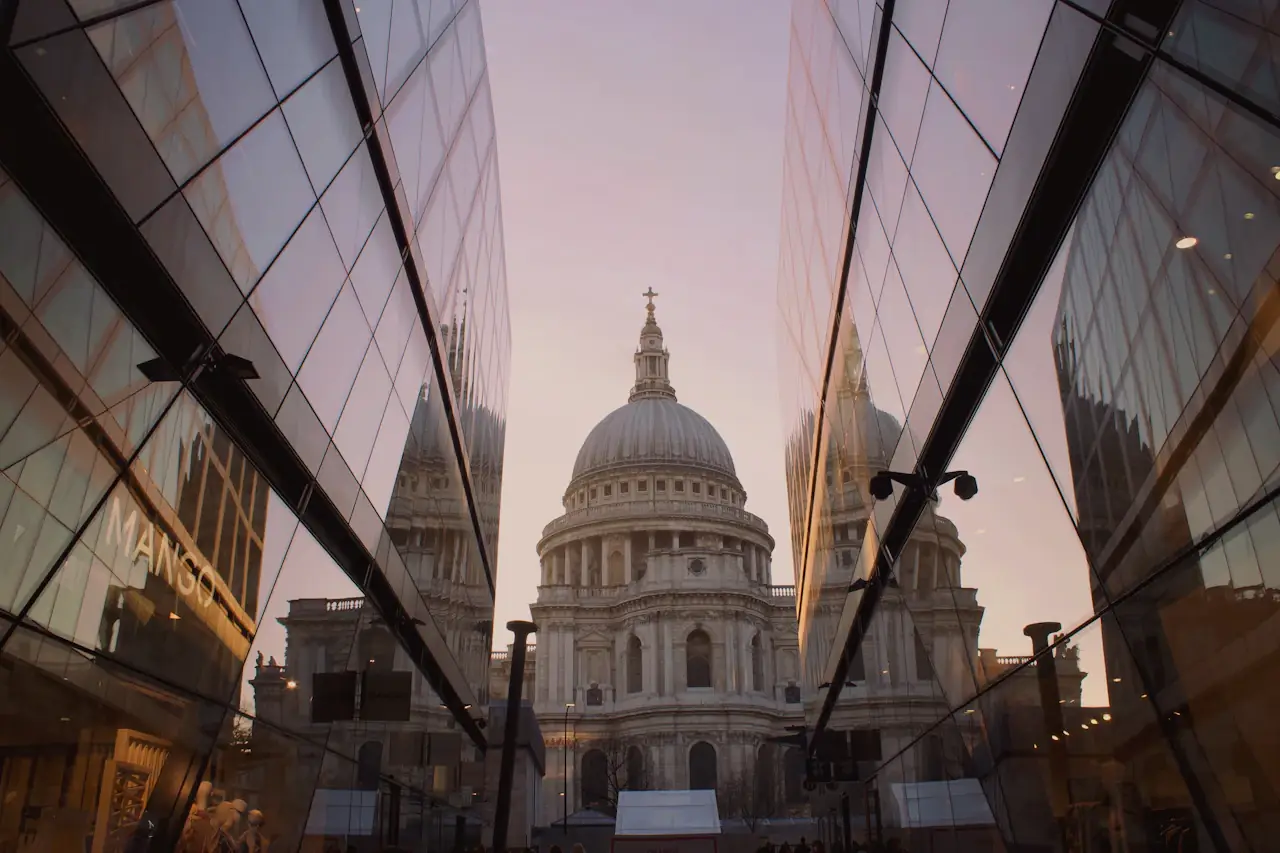
Yes, some big London sights price seniors lower: Westminster Abbey and St Paul's Cathedral both list senior tickets for ages 65+. Westminster Abbey's opening times and prices page lists Adults 65+ at £28 and Adults at £31, and St Paul's Cathedral's ticket types and prices page lists Seniors 65+ at £24 and Adults at £27 without a donation for autumn dates. Tower Bridge has a reduced senior rate but its page gives no age or amount, and the National Gallery is free. London's older-person travel passes need a London borough address, so a visitor from abroad should plan to pay for the Tube and buses by contactless card or Oyster. This guide does not quote group tour operator prices: operators set their own prices and senior rules, so ask the operator directly. What follows is a plan for a self-guided day, built from the attractions' own pages and Transport for London (TfL) pages.
What do seniors pay at the big London sights?
Age thresholds differ from place to place, so read the age column, not just the price.
| Sight | Senior price | Adult price | Age and notes |
|---|---|---|---|
| Westminster Abbey | £28 (Adults 65+) | £31 | Students also £28; children 6-17 £14; under 6 free |
| St Paul's Cathedral | £24 (Seniors 65+ and Students, no donation) | £27 (Adults 18+, no donation) | Its ticket types and prices page lists these prices for dates outside 25 June to 1 September 2026; with the optional 10% donation, Seniors 65+ and Students pay £26.40 and Adults 18+ pay £29.70 |
| Tower Bridge | Reduced rate, shown with valid ID on arrival | Prices vary by ticket | The page gives no age and no pound amount for seniors |
| Windsor Castle | No senior ticket is listed | Not quoted here | Concessionary rates for disabled visitors and a free access companion ticket |
| National Gallery | Free | Free | General admission is free; some exhibitions are charged |
| Buckingham Palace | Not stated | Not stated | The Palace page gives no standard admission price |
A few details behind the table:
- Westminster Abbey. The prices come from its opening times and prices page. The Abbey also lists a National Rail "2 for 1" offer, but only on full-priced adult tickets bought at the door, and it cannot be combined with pre-booked tickets. That does not fit a timed-entry plan.
- St Paul's. St Paul's ticket types and prices page lists the Great British Summer Savings period as 25 June to 1 September 2026 (Seniors 65+ and Students £21.50, Adults 18+ £24, without a donation). That period has ended, so the £24 and £27 table is the one for autumn dates. Admission includes the Cathedral floor, the Crypt, the Dome Galleries and multimedia guides. Students need a photo ID.
- Tower Bridge. The reduced rate is for youth, students and seniors. The page does not say from what age, so do not assume your age qualifies.
- Windsor Castle. The Castle's pages describe no senior ticket, so do not count on a senior discount there. Disabled visitors get concessionary rates and a free access companion ticket.
Prices change by date. Confirm the amount for your visit date on the attraction's page before you pay.
Can an overseas senior use London's older-person passes?
They are built for London residents. TfL's own staff guide dated May 2022 describes the rules; confirm the current rules on tfl.gov.uk. It says:
- The 60+ London Oyster photocard is for people aged 60 or over whose main residence is in a London borough and who are not yet eligible for an Older Persons Freedom Pass.
- The Freedom Pass is for people who have reached state pension age and live in a London borough. The local council pays for it.
- Pay as you go credit cannot be added to either pass.
- Older person's Freedom Pass and 60+ photocard holders travel free only after 09:00 on weekdays. Weekends and bank holidays have no time limit.
Neither page says overseas visitors qualify. Both need a London borough address, so a visitor from abroad should plan to pay by contactless or Oyster.
The same guide covers English National Concessionary Travel Scheme (ENCTS) bus passes issued by English councils. They are valid on TfL buses after 09:00 Monday to Friday and at any time at weekends and bank holidays. They are not valid on trams, the Tube, DLR, London Overground, the Elizabeth line or National Rail. The guide says comparable schemes exist in Wales and Scotland but does not say whether they work in London.
How do contactless and Oyster work for a visitor?
Pay as you go works with contactless bank cards and with Oyster on the Tube, DLR, London Overground, Elizabeth line, most National Rail services within London, buses and trams. TfL's staff guide of March 2025 says single fares are the same for both.
- Daily cap. A cap stops charges once your fares add up to a limit. The TfL Visitor Shop page currently gives £8.90 for Zones 1-2 and says caps vary by zones and time. Check TfL for the cap covering the zones you travel through.
- Same card, in and out. Touch in and out with the same card or device, or the cap will not apply correctly. The Visitor Shop page says to tap at the start and end on the Tube, Elizabeth line, London Overground, DLR and National Rail, and to tap once when you board a bus or tram.
- Peak times. Fares cost more at peak: Monday to Friday 06:30-09:30 and 16:00-19:00. The Visitor Shop page calls all other times off-peak. TfL's March 2025 staff guide adds two exceptions: pay as you go journeys wholly within Zone 1 cost the same whatever time you travel, and Tube and Elizabeth line journeys to and from Heathrow are charged peak fares whenever they start, end or go through Zone 1.
- One card per person. In a group, each person aged 11 or over needs their own contactless card, so a couple cannot share one.
- Foreign cards. TfL's support page says overseas fees may apply to contactless and some foreign bank cards may not be accepted. Visa, Mastercard and American Express are generally accepted. The page does not mention other card networks.
A Visitor Oyster card is the alternative. The TfL Visitor Shop's Visitor Oyster Card page lists a non-refundable £10.50 card fee. The Visitor Shop page says online purchases are temporarily unavailable during a change of provider, and transport tickets can still be bought on arrival. Whether Visitor Oyster cards are on sale online for your dates is therefore uncertain. Contactless with a card you already carry avoids the question.
| Option | Who can use it | Time limits |
|---|---|---|
| Contactless bank card | Any visitor whose card is accepted | Daily cap applies; peak fares Mon-Fri |
| Visitor Oyster | Any visitor | Same single fares as contactless; caps can differ for some journeys; the TfL Visitor Shop's Visitor Oyster Card page lists a £10.50 non-refundable card fee |
| 60+ Oyster photocard | Main residence in a London borough | Free after 09:00 weekdays |
| Freedom Pass | State pension age, London borough resident | Free after 09:00 weekdays |
| ENCTS bus pass | Issued by an English council | TfL buses only, after 09:00 Mon-Fri and any time at weekends |
Help for reduced mobility. The Visitor Shop pages say to contact both stations, at the start and end of a journey, to request assistance in advance on the Tube and rail. TfL publishes an "Access London" guide with step-free stations and accessible bus routes. London's black cabs are designed for passengers with mobility needs. Visitors with international disability badges can use them under the Blue Badge scheme for parking concessions.
Which sights suit someone who tires quickly?
The pages describe very different physical demands. Here is what each one says.
| Sight | Step-free and lifts | Where the stairs are | Rest and loans |
|---|---|---|---|
| Westminster Abbey | Step-free at the North Door and Great West Door; the wheelchair-accessible door is the North Door; lift to the Queen's Diamond Jubilee Galleries | Lady Chapel and the tombs beyond it (12 steps, plus 3 into each space), side chapels, Cloisters entry from the church (5 steps), Chapter House, Pyx Chamber | Benches in the Nave and South Transept; wheelchairs free from an Abbey Marshal |
| St Paul's Cathedral | Ramped North Transept entrance is recommended; floor, Crypt and Quire reachable without stairs | Dome Galleries are stairs only: 257 steps to the Whispering Gallery, 376 to the Stone Gallery, 528 to the Golden Gallery | Wheelchairs on request |
| Tower Bridge | Two lifts to the high-level walkways, one in each tower | Comfortable shoes advised for the towers | Benches in the towers, walkways and Engine Rooms; stools, wheelchairs and walking frames to borrow |
| National Gallery | Sainsbury Wing entrance is step-free; lifts throughout | None highlighted | Seating in rooms on Level 2 and near the Getty Entrance; folding stools; wheelchairs and a rollator can be booked |
- Westminster Abbey. Most of the self-guided route is step-free. If you want the Cloisters, the Abbey suggests leaving by the Great West Door and re-entering through the step-free cloister entrance in Dean's Yard. Queues on busy days can pass an hour, and timed-entry tickets bought online give fast-track entry. The Abbey says weekday mornings are quietest. Westminster is the nearest step-free Underground station. Opening hours differ by day; the opening times and prices page shows a September 2026 calendar, so check its calendar for your visit date.
- St Paul's Cathedral. The page advises people with mobility difficulties or medical conditions not to climb the Dome stairs. The floor, Crypt and Quire need no stairs. There is no cloakroom, and the maximum bag size is 45cm x 30cm x 25cm, including handles, wheels and pockets. Sightseeing runs Monday to Saturday; the Dome Galleries also open on Sundays from 15 March to 25 October 2026.
- Tower Bridge. The queue is outside, and lifts can be out of order at short notice. The access page gives a bookings phone number, 020 7407 9191 (Monday to Friday, 9am to 5pm), for lift questions. A visitor whose disability means they cannot queue can ask staff at the ticket office about priority entry.
- Free for disabled visitors. Westminster Abbey gives free admission to registered disabled visitors and their essential companion. St Paul's gives a free ticket to a disabled visitor and one carer or companion.
What can you see free in a day?
The National Gallery. General admission is free and donations are welcome. Booking a free ticket online gives fast-track entry, and walk-up entry is also available. It is open daily 10am to 6pm, Fridays until 9pm, and closed 24-26 December and 1 January. The entrance is through the Sainsbury Wing, which is step-free. The nearest step-free Underground stations are Tottenham Court Road and Westminster, and the nearest step-free rail station is Charing Cross.
Two things to know first. Some exhibitions are charged, and the page lists Renoir and Love, 3 October 2026 to 31 January 2027, without a price. The page also says some rooms are closed for building work and some paintings have been moved, so a specific painting may not be where you expect. On 6 October only the east wing closes early, at 5pm.
The National Gallery's plan your visit page lists a cloakroom charge of £3 per item (free for Members), and wheeled luggage is not allowed.
Is Windsor Castle a realistic day trip for an older visitor?
It can be, if you give it the day and are honest about hills. Windsor Castle's practical information page suggests allowing 1.5 to 2 hours for the visit. The Castle sits at the top of a steep hill. You walk uphill from the High Street to the Admission Centre and uphill again inside the grounds, the visitor route covers long distances, and the page recommends comfortable shoes.
Help exists. The mobility page describes step-free routes using platform lifts and a ramp in Engine Court (ask staff for that route), and lifts run by Castle Wardens. Manual wheelchairs and rollators can be borrowed free of charge on a first come, first served basis. Seating is limited on the walk to the State Apartments, though seating is available in the Nave of St George's Chapel and limited seating in the State Apartments on request. There is no visitor parking at the Castle. The page also mentions Shopmobility at the Alma Road Coach park, a short walk from the entrance, where mobility equipment can be hired.
Timing points from the same pages:
- St George's Chapel closes at 16:00 and is closed to visitors on Sundays.
- The whole Castle or the State Apartments can close at short notice, because it is a working royal palace.
- Airport-style security applies. Large backpacks cannot go into the State Apartments, and the cloakroom is a largely uphill walk from the Admission Centre.
Is Buckingham Palace open?
Only on limited terms. Its page says the State Rooms open to visitors each summer, and for the rest of the year the Palace opens only on selected dates for guided tours. Check the Palace page for current opening dates rather than planning around a date you have heard elsewhere.
For older visitors the page adds three warnings. The standard admission route is not step-free, and step-free access must be pre-booked with the Specialist Sales team (+44 (0)303 123 7324). The State Rooms tour is indoors over two floors and ends with a long outdoor gravel path. It can also become very hot inside in summer. Seating is limited.
How much can one day hold?
Less than a list suggests. The pages point to a few rules:
- Pair, do not stack. Put a demanding place (Windsor's hill, St Paul's stairs, Tower Bridge's outdoor queue) next to an easy indoor one, such as the National Gallery, and allow rest breaks between them.
- Give Windsor its own day. With 1.5 to 2 hours inside plus the uphill walks, and the Chapel closing at 16:00, it does not combine well with a central London plan.
- Use the quiet hours. Westminster Abbey's page says weekday mornings are calmest. St Paul's usually opens its doors at 8.30am Monday to Saturday, with last entry usually at 4pm.
- Book what has queues. Timed-entry tickets bought online give fast-track entry at the Abbey, and a free booked ticket gives fast-track entry at the National Gallery.
- Pre-arrange access. Request assistance on the Tube and rail in advance, pre-book step-free entry at Buckingham Palace, and contact Tower Bridge's bookings team about lift availability before you travel.
Which should you choose?
| If this is you | Suggested shape of the day |
|---|---|
| You tire quickly or use a walking aid, and want a calm day | Westminster Abbey on a weekday morning (step-free, benches, free loan wheelchairs), then the National Gallery (free, lifts, stools and seating) |
| You can manage some stairs but not hundreds | Westminster Abbey or Tower Bridge (lifts to the walkways), and skip the St Paul's Dome; stay on the cathedral floor and Crypt |
| You want the cathedral views and are comfortable with long stairs | St Paul's including the Dome Galleries (528 steps in total to the Golden Gallery), plus a free-entry stop such as the National Gallery afterward |
| You use a wheelchair | Abbey (North Door), St Paul's (North Transept ramp), Tower Bridge (lifts) and the National Gallery are all described as step-free at their main routes; Windsor needs staff-operated lifts on a hilly site |
| You want Windsor Castle | Make it the whole day; ask staff about the step-free route and start early enough for the Chapel's 16:00 close |
| You want Buckingham Palace | Check the Palace page for opening dates first; if you need step-free access, pre-book it with the Specialist Sales team |
Need flights or a hotel quote?
If you need flights or a hotel for your London trip, send us your travel dates and we will prepare a quote. Contact us.