Choose Kotor if your group wants a bay to sail or kayak, a mountain fortress to climb and boat trips. Choose Dubrovnik if you want one walled old town, a walk around the city walls and islands a short boat ride away. If you have the days, split them: the two towns sit in different countries with different entry rules, but bus, road and a boat link connect them. The biggest 2026 change is on the Montenegro side. Montenegro's Ministry of Foreign Affairs says nationals of Belarus, China, Russia, Saudi Arabia and Türkiye need a visa to enter Montenegro from 1 November 2026. Croatia is in the Schengen area, and both countries use the euro.
The two towns on the numbers the official pages give
| Dubrovnik (Croatia) | Kotor (Montenegro) | |
|---|---|---|
| UNESCO listing | Old City of Dubrovnik, inscribed 1979 (boundary change 1994, minor change 2018) | Natural and Culturo-Historical Region of Kotor, inscribed 1979 (minor changes 2012 and 2015) |
| Size of listed area | 96.7 ha | 14,600 ha, two bays ringed by mountains rising to nearly 1,500 m |
| Walls | 1,940 m long, sixteen towers, three fortresses (Society of Friends of Dubrovnik Antiquities) | 4.5 km of wall climbing to a fortress at 300 m, about 1,400 steps (Montenegro tourist board) |
| Airport to town | Dubrovnik Airport about 22 km from the Old City | Tivat Airport 8 km and 12 minutes by car to Kotor |
| Currency | Euro | Euro |
UNESCO's descriptions call Dubrovnik the "Pearl of the Adriatic", a Mediterranean sea power from the 13th century. It was damaged by the 1667 earthquake and again in the 1990s and is now the focus of a restoration programme UNESCO coordinates. For Kotor, UNESCO names Kotor and Perast as highly characteristic, authentically preserved small cities and says the town was restored after the 1979 earthquake, largely with UNESCO's help. Kotor's fortifications also belong to a second UNESCO listing, the Venetian Works of Defence (inscribed 2017), which has six components in Italy, Croatia and Montenegro.
Getting there, and between the two
Dubrovnik. The Dubrovnik Tourist Board's arrival page puts Dubrovnik Airport (Ruđer Bošković) about 22 km from the historic Old City and says it has more seasonal flights in summer. The airport's own Getting to DBV page says 22.5 km, a 30 to 35 minute drive on average, and up to an hour in the summer months. Onward options named on those pages are the official Platanus shuttle, public bus lines 11, 27 and 38, taxi, private transfer and car rental.
Kotor. Tivat Airport (TIV) is one of Montenegro's two international airports. The Montenegro tourist board says it is 4 km from Tivat town centre and that flights from most European capitals take about two hours. Montenegro Airports' "Kako do nas?" page (in Montenegrin) lists Kotor at 12 minutes and 8 km by car, Budva at 27 minutes and 21 km. The other international airport is Podgorica; the Montenegro tourist board's arrival page does not give a Podgorica-to-Kotor distance.
Between the two. The Dubrovnik Tourist Board lists long-distance buses to Montenegro and a boat link labelled "Montenegro", with no timetable. The Montenegro tourist board lists "Ferry Dubrovnik – Kotor & Budva – Dubrovnik" as a heading only, and lists bus connections with Croatia. By road, its entry-conditions page names two crossings with Croatia: Debeli brijeg and Kobila. The official tourism pages do not give a driving time between the towns or a border waiting time. Look up the timetable and the border traffic status (the Dubrovnik arrival page links one) before you fix the transfer day.
If you drive in Dubrovnik. From 1 April to 31 October 2026, and during special events or heavy traffic, vehicle access to the zone around the historic core is allowed only with prior arrangements. The ways in are:
- the bus web shop, for vehicles with 7+1 seats or more (a friend group in a minibus falls here);
- pre-booked parking through the official app at the lots below the Dubrovnik Cable Car and at Pile;
- a hotel inside the zone;
- private accommodation with garage parking, where the host registers your plate in advance.
The Tourist Board's "Getting around" page adds that there are parking facilities outside the centre.
Entry and money: Croatia and Montenegro are two separate systems
Rules depend on your passport. The table shows what each government page says; read the page for your own nationality.
| Croatia | Montenegro | |
|---|---|---|
| Union status | The Schengen acquis has applied in full since 1 January 2023 (Croatian Ministry of Foreign and European Affairs) | Montenegro runs its own visa regime (gov.me). Its ministry's July 2026 news item calls EU membership a path the country is still on |
| Stay length | Third-country nationals: up to 90 days in any 180-day period, counted together with time in other Schengen states | Depends on nationality: up to 90 days for the long list of countries on the gov.me visa page; up to 30 days for several other groups, including holders of a valid Schengen visa or a Schengen residence permit, but no longer than the visa or permit remains valid |
| Travel document | For third-country nationals, valid at least three months after planned departure and issued within the previous 10 years (EU/EEA citizens can use a passport or ID card) | The gov.me visa page lists nationality-based rules; see below |
| Currency | Euro since 1 January 2023 (ministry announcement of 30.12.2022) | Euro (Montenegro tourist board facts page) |
| Cards | The Croatian ministry pages do not give payment information | Visa, Visa Electron, Mastercard, Maestro, American Express, Diners (Montenegro tourist board's Useful tips & facts page) |
| Registering your stay | Not covered on the Croatian ministry pages | The host (hotel or private accommodation) must register your stay within 12 hours of arrival and deregister it when you leave. If you stay in several municipalities, you must register in each one where you stay for more than 24 hours. A foreigner not using a host's service can report to the local tourist organisation or police within 24 hours |
Croatia. The ministry also points to the EU's Entry Exit System (EES) online tool for checking how many days you have left. Dubrovnik Airport's traveller guide says EES is being introduced, applies to non-EU travellers who are visa-exempt or hold a short-stay Schengen visa, and at Dubrovnik covers passengers on direct flights to or from the United Kingdom, Serbia, the United Arab Emirates, the United States and Ireland. It advises arriving earlier than usual for direct flights outside the Schengen area.
Montenegro. The gov.me visa page says which nationalities enter without a visa and for how long. That page does not carry the 2026 change. The Ministry of Foreign Affairs news item of 27 July 2026 says the Government adopted a decree on 23 July 2026: nationals of Belarus, China, Russia, Saudi Arabia and Türkiye will need a visa from 1 November 2026, as part of aligning with EU visa policy. Applications can go through VFS Global centres in India, Bangladesh, Kyrgyzstan, Azerbaijan, Türkiye, the United Arab Emirates and Russia, with more centres planned, China among them. A Chinese, Russian, Turkish, Saudi or Belarusian passport holder should read that news item and the visa page together, and anyone travelling before 1 November 2026 should confirm the current rule on gov.me.
Sights and official tickets
Dubrovnik
The walls are the main event. The Tourist Board describes a circuit of about 2 km, says to allow at least an hour, and recommends early morning or late afternoon to avoid crowds and midday heat. The Society of Friends of Dubrovnik Antiquities, which runs the walls, says on its FAQ page:
- The walls are open every day except 25 December. The winter period runs 1 November to 31 March, with hours listed per site on its website.
- The closing time is also the last entry. No reservation is required.
- Tickets can be bought ahead in the Society's official webshop and must be activated at the entrance of the site you chose.
- A ticket is valid for one tour and re-entry is not possible (code of conduct).
- A City Walls ticket also admits you to Lovrjenac Fortress. A Lovrjenac ticket on its own does not admit adults to the walls. The webshop says it gives adults a discount on a City Walls ticket, and that children aged 18 and under enter the walls free with it.
- Children under 7 are free and children 7 to 18 pay the children's ticket. Students get a discount with a Croatian Student Card (X-ica), ISIC or the European Youth Card.
The Society's official webshop asks for a visit date and then shows the price. For a visit on 30 September 2026 it listed the Dubrovnik City Walls ticket at 40,00 EUR for adults and 15,00 EUR for children aged 7 to 18, with free admission for children aged 6 and under. It says the walls ticket also covers Lovrjenac Fortress, the Western Outer Wall (closed in December, January and February) and the Collection of Coins of the Republic of Ragusa at Gundulić Square 6. A Lovrjenac Fortress ticket on its own was 15,00 EUR. Choose your own date in the webshop to see the price that applies to you. The Society's pages do not list exact summer opening hours, so check citywallsdubrovnik.hr before you go.
| Sight | What the official pages say | Price shown |
|---|---|---|
| City Walls (ticket includes Lovrjenac) | Society webshop, activate at entrance, one tour per ticket | Adult 40,00 EUR; child 7 to 18 15,00 EUR; 6 and under free (webshop, visit date 30 September 2026) |
| Lovrjenac Fortress only | Society webshop | 15,00 EUR (same date) |
| Dubrovnik Pass | Digital pass for 1, 3 or 7 days, sold online, at the airport by QR code and at sales points (hotels, some museums, tourist centres). Includes free public transport within the city, City Walls + Fort Lovrijenac and a list of museums and galleries, each single-use per location; children under seven need no pass | The airport's Dubrovnik Pass page, a summer 2025 page, listed EUR 40.00, 50.00 and 60.00 for 1, 3 and 7 days; check the official Dubrovnik Pass webshop for current prices |
| Cable car to Mount Srđ | Panoramic views of the Old City, Lokrum and the Adriatic; mountaintop restaurant | Not on the page |
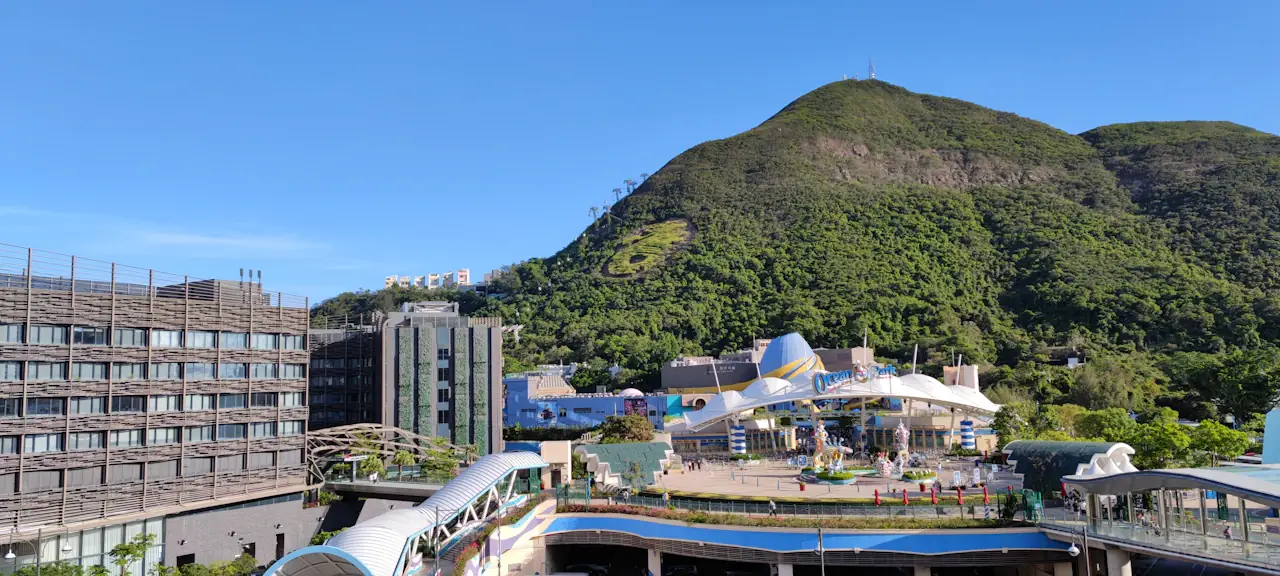
| Lokrum | Ten-minute boat ride from the Old City harbour; Botanical Garden, Benedictine Monastery, peacocks, the "Dead Sea" swimming pool | Not on the page |
| Elaphite Islands | Šipan, Koločep and Lopud; regular boat lines run from the Old City and Gruž port to the Elaphites, Lokrum and Cavtat | Not on the page |
The museums on the pass include the Rector's Palace, Maritime Museum, Cultural-Historical Museum, Franciscan Monastery Museum and Marin Držić House. The Tourist Board also lists Sponza Palace, the Franciscan Monastery (pharmacy established 1317) and Gruž Market. The airport's pass page notes that Dubrovnik is recognised worldwide as King's Landing from Game of Thrones.
Kotor
The Montenegro tourist board says Kotor's walls run from the sea up to the fortress and back down, and suggests an hour-long exploration. It also lists the Old Town's Clock Tower, Cathedral of St. Tripun, Church of St. Luka, Church of St. Marija, Prince's Palace, Church of Our Lady of Health and Napoleon Theater. Neither the Montenegro tourist board's pages nor the Kotor tourist organisation's page on the walls shows an entrance fee or opening hours, so ask at the entrance or at the tourist office.
The Kotor Cable Car (Montenegro tourist board) runs from the lower Dub station near Kotor to the upper Kuk station on Mount Lovćen at 1,348 m. The page gives a 1,316 m altitude difference, a 3,900 m route, an 11-minute ride and 48 gondolas carrying up to 1,200 passengers an hour. The lower station is 200 m from the Budva-Tivat road and the upper station 18 km from Cetinje. The page shows no fare or timetable.
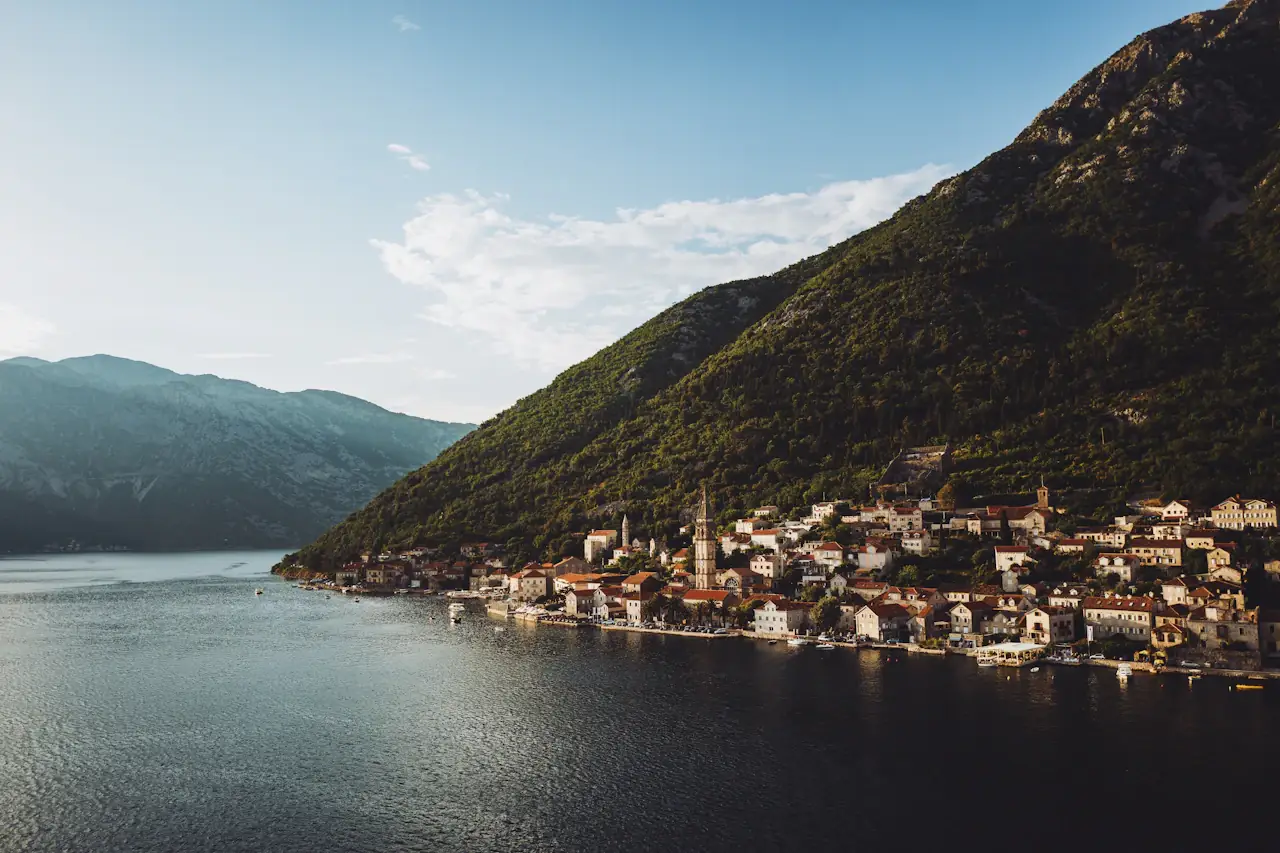
The bay is the other half of Kotor. The Montenegro tourist board's Bay of Kotor page lists boat tours, sailing, kayaking, stand-up paddleboarding, hiking and paragliding among the top activities. It names the Blue Cave near Luštica ("the Sapphire of Boka"), Perast and the church of Our Lady of the Rocks (Gospa od Škrpjela) in the middle of the bay, the Boka Navy tradition, the Cat Museum in Kotor and a carnival tradition it dates back half a millennium. Its fortresses page adds a bay cruise to the mouth of the bay, where the fortresses of Arza, Mamula and Prevlaka stand, and hikes to fortresses deeper inside the bay.
Summer crowds: what the official sources say
Dubrovnik cruise ships. The Dubrovnik Port Authority's cruise page carries no date, so read it as the Port Authority's stated approach, not as 2026 counts. It says the authority has been trying to limit cruise passengers, in most cases to 8,000 per day. Of 243 cruise days a year, 18 exceed about 8,000 passengers, six of them in July and August, and four days a year run slightly above 10,000. Ships use about 85% of capacity on average. With the Dubrovnik County Port Authority it uses a 2+1 booking principle: two large cruise ships at the port and one in front of the Old City. It also says it refused about forty cruise call requests in one season.
City tools. On its page dated 27 November 2018, the City of Dubrovnik describes "Respect the City" (Poštujmo Grad) as a strategic destination-management project with an action plan that aims to reduce the negative effects of over-tourism, protect heritage and residents' daily life, and give visitors the best experience. Its "Dubrovnik Visitors" page (dated 31 October 2018) describes a machine-learning tool that estimates how many people are in the historic core and its contact zone on a chosen day, using cruise passenger numbers, arrivals and overnight stays, and weather data. The City says it helps residents and tourists plan a visit to the Old Town. The City's page does not give daily visitor figures.
Tourist Board tips. Walk the walls early morning or late afternoon, and visit Sponza Palace in the early morning. The vehicle zone above is in force from 1 April to 31 October 2026.
Kotor. The official tourism pages do not give crowd numbers or cruise limits for Kotor. The Montenegro tourist board calls the Port of Kotor a very popular cruise destination. UNESCO's Kotor page says the integrity of the property is endangered by development and urbanisation, including new tourism centres, roads and buildings on the coast.
Heat. The Montenegro tourist board's facts page gives country-wide figures, not Kotor figures: an average summer air temperature of 27.4 C, a maximum sea temperature of 27.1 C and 240 sunny days a year.
How many days
Here is what fits in one day and what a longer stay can add.
- Dubrovnik in one day. The Tourist Board's one-day plan runs from 8:00 am at Pile Gate to about 8:00 pm: Stradun and the walls in the morning, the Rector's Palace and Franciscan Monastery, Lokrum at midday, Lovrjenac in the afternoon, and the cable car at golden hour. Its menu also lists 3-day and 7-day plans for a longer stay.
- Kotor in a day. The walls alone are an hour-long exploration on the Montenegro tourist board's figure. The cable car ride is 11 minutes. Boat tours of the bay, Perast and the Blue Cave are what turn it into more than a walls-and-viewpoint stop.
- Both in one trip. Use the getting-there facts above. The official pages do not give the transfer time, so settle it, and the border, before you decide how many nights each town gets.
Which should you choose
Lean toward Kotor if:
- your group wants water and mountains at once: bay boat tours, kayaking, hiking, a fortress above town and a cable car to 1,348 m;
- you are flying to Tivat, where Kotor is 12 minutes by car;
- you are comfortable planning without official daily crowd figures, which the official tourism pages do not provide for Kotor;
- everyone's passport is confirmed for Montenegro's rules.
Lean toward Dubrovnik if:
- you want one walled old town with a walls circuit of about 2 km and a museum pass;
- islands by short boat ride matter: Lokrum is ten minutes from the Old City harbour and the Elaphites are a short boat trip;
- you want the city's own tools for planning around crowds (the Dubrovnik Visitors estimate and the vehicle zone rules);
- everyone can enter Croatia under Schengen rules.
Split your time if you have the days and the passports to cover both. Fly into one airport, cross by bus, road or the boat link, and plan the Montenegro leg around its own entry rules and its own currency-and-registration basics above. If one person in the group holds a passport that needs a Montenegrin visa, decide first whether the Montenegro leg is worth the extra paperwork; the Croatia leg stays under Schengen rules.
Need flights or a hotel quote?
If you want help with flights or hotels for a Kotor, Dubrovnik or combined trip, contact us with your travel dates and we will come back with a quote: contact us.